An Employee Engagement Survey in Egypt is one of the most effective ways to understand what your employees really think. Employee disengagement is a hidden threat silently eating away at productivity, retention, and company culture. Whether you run a small startup in Cairo or a large manufacturing company, understanding employee engagement helps you make better HR decisions.
Many business owners mistake “engagement” for perks like team outings or occasional bonuses. However, real engagement runs deeper. It’s about understanding what your workforce truly feels, what drives them, and where your organization may be falling short. This is exactly what an Employee Engagement Survey delivers.
What ss an Employee Engagement Survey in Egypt?
An Employee Engagement Survey isn’t just a formality—it’s a diagnostic tool for your company’s health. By definition, it collects structured feedback from employees to measure satisfaction, motivation, alignment, and overall engagement. Unlike casual feedback or manager impressions, a survey captures what employees actually experience day to day.
For instance, by asking the right questions, you can uncover:
- Whether employees trust leadership
- How clear their career growth paths are
- If they feel valued and heard
- Whether workload and work-life balance are sustainable
- How aligned they are with company goals
- Where team collaboration or recognition systems are failing
In short, an Employee Engagement Survey gives you a data-driven view of your workforce, helping you understand not just whether employees are satisfied, but whether they are motivated, committed, and performing at their best.
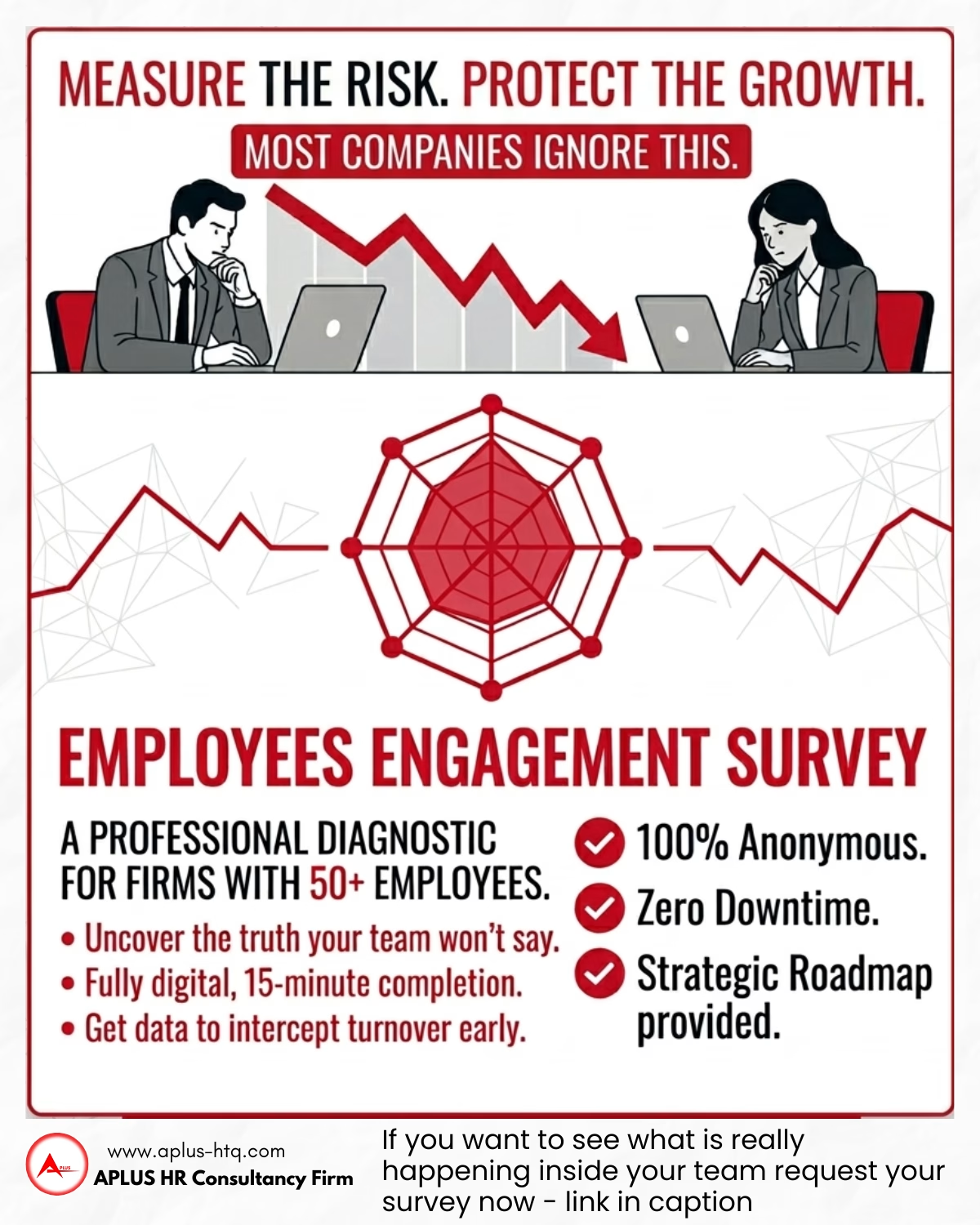
Key areas measured in an Employee Engagement Survey
A professional survey explores multiple dimensions that directly impact performance and retention. Specifically, these include:
- Trust in Leadership: Do employees believe management acts with integrity and fairness?
- Career Development: Are there clear growth opportunities within the company?
- Feeling Valued & Heard: Does feedback lead to action?
- Work-Life Balance: Are employees able to manage workloads without burnout?
- Alignment with Company Goals: Do employees understand and support your mission?
- Team Collaboration & Communication: Are teams working efficiently together?
- Recognition & Rewards: Are contributions acknowledged and celebrated?
- Job Satisfaction & Motivation: Are employees inspired to perform at their best?
- Culture & Morale: Does the workplace foster trust, respect, and collaboration?
- Innovation & Autonomy: Are employees empowered to share ideas and take initiative?
- Feedback & Performance Management: Are expectations clear and feedback regular?
Additionally, these areas help leaders identify hidden problems before they escalate, allowing targeted interventions.
The Engagement Matrix
| Dimension | Why It Matters |
|---|---|
| Growth Potential | Keeps top talent from being headhunted |
| Management Trust | Reduces workplace friction and internal politics |
| Culture & Morale | Builds a brand that attracts elite candidates |
| Recognition | Improves motivation and retention |
| Work-Life Balance | Reduces burnout and absenteeism |
As a result, this matrix provides a quick view of engagement priorities and guides effective interventions.
Why an Employee Engagement Survey in Egypt is essential
1. Boost Productivity – Employees who feel understood and supported don’t just work—they excel. Surveys help remove invisible obstacles slowing them down.
2. Drastically Reduce Turnover – Replacing skilled employees is costly. Therefore, early identification of disengagement allows intervention before resignations occur.
3. Enhance Company Culture – Surveys reveal your workplace’s true DNA. In addition, use this data to cultivate a culture of respect, recognition, and collaboration that makes you an “Employer of Choice.”
4. Data-Driven HR Decisions – Stop guessing. Instead, use concrete insights to design training programs, reward systems, and performance management strategies.
According to Gallup’s State of the Global Workplace Report, engaged employees are more productive and more likely to stay with their employer.
Real-Life Success: A Cairo Tech case study
A mid-sized tech company in Cairo noticed rising turnover and declining morale. Employees felt unclear about career progression, lacked recognition, and were unsure if leadership valued their input.
As a result of conducting an Employee Engagement Survey, the company discovered the root causes and took action:
- Implemented clear development plans
- Introduced a monthly recognition program
- Improved internal communication
Consequently, within six months, satisfaction scores jumped by 35%, and voluntary turnover dropped by 40%. The survey transformed disengagement from a hidden risk into a competitive advantage.
How to design an Effective Employee Engagement Survey
To ensure meaningful results, follow these principles:
- Keep it Concise: Respect employees’ time to increase completion rates.
- Ensure Absolute Confidentiality: Employees only share honest feedback when they feel safe. Therefore, a third-party platform can guarantee anonymity.
- Take Action: Surveys without follow-up are just paper. Hence, communicate findings transparently and demonstrate real change.
Furthermore, regular surveys allow you to track improvements, measure ROI, and continuously optimize your HR strategy.
Start your Employee Engagement Survey in Egypt today
Every month that disengagement goes unnoticed costs your business productivity, morale, and profit. Your next Employee Engagement Survey could uncover the gaps that save your next quarter.
👉 Request Your Employee Engagement Insight Survey Now to make data-driven HR decisions, boost productivity, and retain your best talent.