Archives 2026

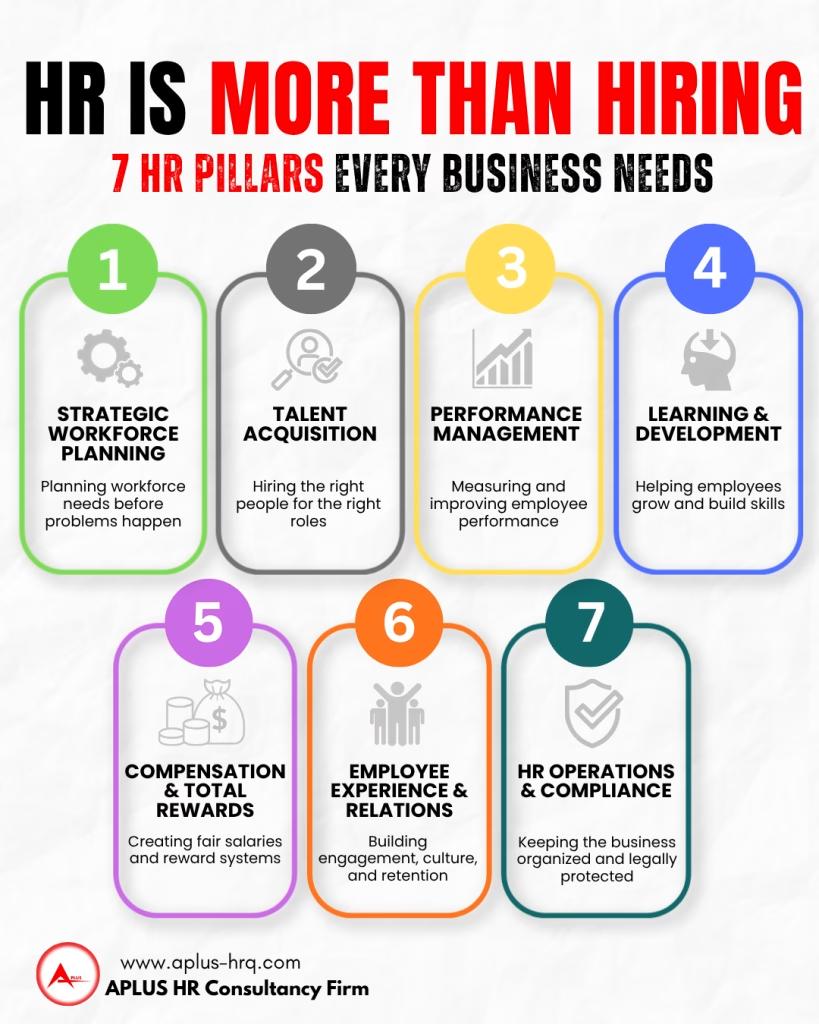
HR is more than hiring: The 7 Core HR Pillars every Business in Egypt needs

Many business owners in Egypt still underestimate the importance of HR pillars Egypt, believing that HR is only about hiring employees. However, modern HR affects almost every part of a business including performance, productivity, structure, compliance, retention, and long-term growth.

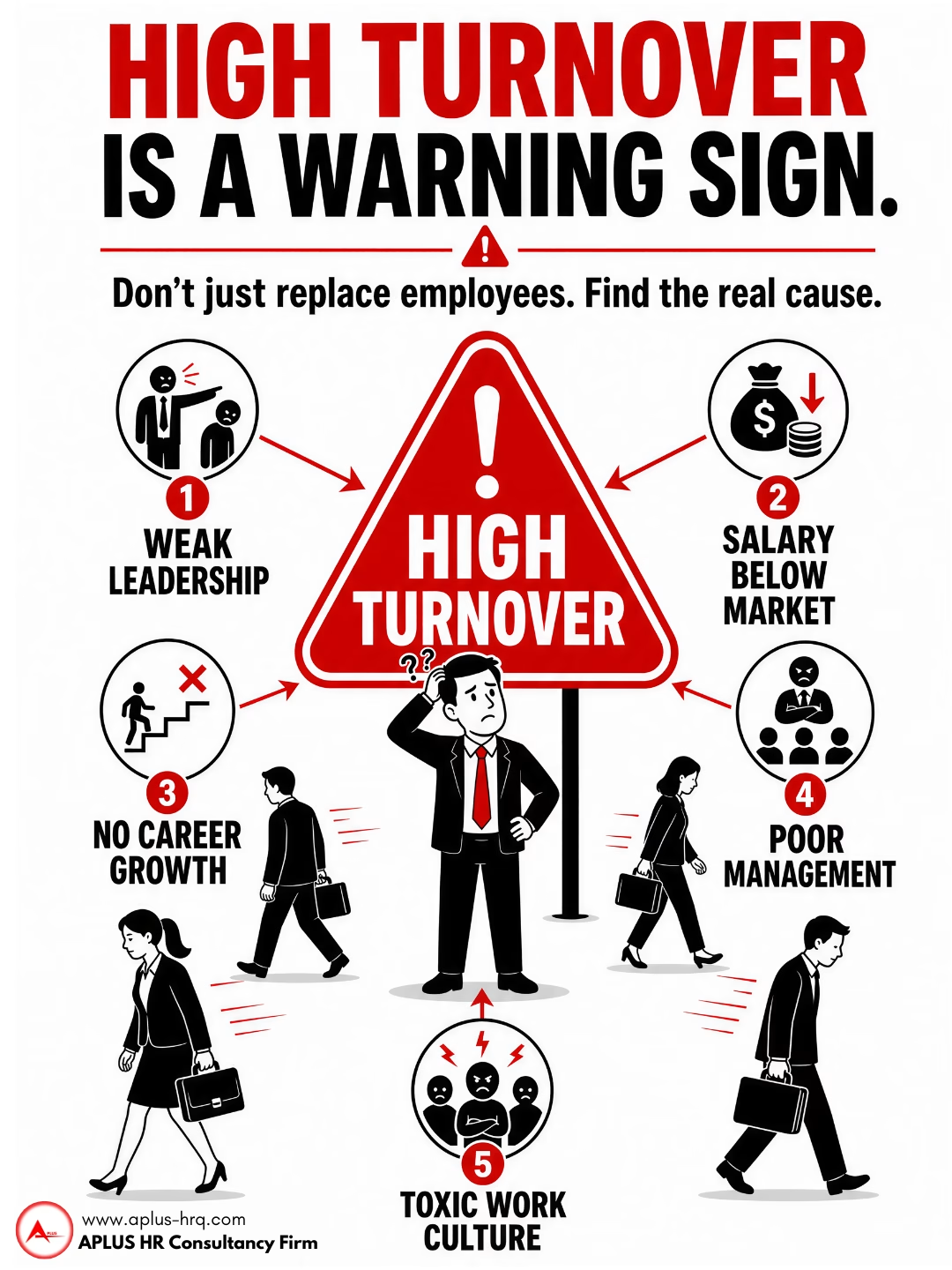
As a result, companies without a strong HR structure often struggle with high employee turnover, low accountability, and operational chaos.

In fact, most businesses only realize the importance of HR when problems appear, such as resignations or declining performance. However, a well-structured HR system should prevent these issues before they happen.

👉 Explore more HR insights and business resources here: https://aplus-hrq.com/blog/

This article explains the 7 core HR pillars every business in Egypt should understand to build a stronger and more scalable organization.

HR pillars Egypt 7 core HR pillars infographic for business growth

1. Strategic Workforce Planning in HR pillars Egypt

One of the most important HR pillars Egypt companies often ignore is workforce planning. In fact, strategic workforce planning ensures that businesses have the right people in the right roles at the right time.

One of the key issues is that many companies in Egypt hire reactively instead of planning ahead. As a result, they face rushed decisions and skill gaps.

Example:

A company wins a new contract but does not have enough skilled employees. As a result, operations slow down and delivery is delayed.

Without workforce planning:

  • poor hiring decisions
  • staffing shortages
  • high recruitment costs
  • operational disruption

With proper planning:

  • future workforce needs are predicted
  • hiring becomes structured
  • business expansion becomes smoother
  • risks are reduced

2. Talent Acquisition in HR pillars Egypt

Strong hiring systems are a key part of HR pillars Egypt and reduce turnover significantly. Moreover, talent acquisition is more than posting job ads. It is a structured process for attracting, selecting, and integrating the right talent.

Many businesses still rely on quick hiring decisions without proper assessment, which leads to high turnover.

Example:

A company hires a manager quickly without structured interviews. After a few months, performance issues appear and the employee leaves.

Weak hiring leads to:

  • repeated recruitment cycles
  • wasted salary costs
  • poor employee retention

Strong hiring includes:

  • job analysis
  • clear job descriptions
  • structured interviews
  • competency-based selection
  • onboarding systems

3. Performance Management in HR pillars Egypt

Without clear KPIs, businesses fail to activate HR pillars Egypt effectively. Therefore, performance management ensures that employees clearly understand expectations and how success is measured.

Without it, employees often work without direction, and managers rely on subjective judgment.

Without performance systems:

  • productivity becomes inconsistent
  • accountability weakens
  • motivation drops

Strong performance systems include:

  • KPIs
  • clear goals
  • regular feedback
  • performance reviews
  • improvement plans

When expectations are clear, performance naturally improves.

4. Learning & Development

Employee development is essential for long-term business growth. However, many companies expect employees to improve without structured training.

Example:

A company hires new employees but provides no onboarding or training. Mistakes increase and managers become overloaded.

Without training:

  • repeated mistakes
  • skill gaps
  • slow productivity

Strong development systems include:

  • onboarding programs
  • technical training
  • leadership development
  • soft skills training
  • coaching

Training builds capability and reduces operational pressure.

5. Compensation & Total Rewards in HR pillars Egypt

Salary alone is no longer enough to retain employees. Instead, employees also value fairness, recognition, and career growth.

Example:

Two employees in the same role receive different salaries without structure, leading to dissatisfaction and resignations.

Weak compensation systems lead to:

  • low morale
  • high turnover
  • internal conflict

Strong systems include:

  • salary structures
  • job grading
  • performance-based bonuses
  • internal fairness policies

Fair compensation builds trust and stability.

6. Employee Experience & Relations in HR pillars Egypt

Employee experience is one of the most underestimated HR pillars Egypt in local companies. In addition, it directly impacts engagement, productivity, and retention.

Even high salaries cannot fix a poor workplace culture.

Example:

Employees feel ignored by management, leading to disengagement and low motivation.

Weak employee experience leads to:

  • quiet quitting
  • conflict
  • toxic culture
  • turnover

Strong employee experience includes:

  • open communication
  • recognition systems
  • leadership behavior
  • feedback culture
  • employee support

People don’t leave companies — they leave environments.

7. HR Operations & Compliance

HR operations ensure structure, consistency, and legal compliance inside the organization. Therefore, in Egypt, compliance with labor laws is essential for avoiding legal and financial risks.

Example:

A company without proper contracts and HR systems faces payroll disputes and employee complaints.

Weak HR operations lead to:

  • legal risks
  • payroll errors
  • inconsistent policies
  • employee disputes

Strong HR operations include:

  • HR policies
  • employment contracts
  • attendance systems
  • payroll processes
  • labor law compliance

This pillar protects the business and ensures stability.

Why HR pillars in Egypt matter for Business Growth

Businesses in Egypt face increasing challenges such as high turnover and rising operational costs. Consequently, without a structured HR system, even skilled employees cannot perform effectively.

On the other hand, when businesses apply all HR pillars Egypt, performance and structure improve significantly. As a result, companies scale faster, reduce turnover, and build stronger teams.

Final Thoughts

Most business owners believe they have people problems.

In reality, they often have system problems in HR.

When companies build structured HR systems, they experience:

  • better performance
  • stronger organization
  • improved retention
  • clearer accountability
  • reduced management pressure

Strong HR builds strong businesses.

Book a HR Call

If your business is struggling with:

  • employee performance
  • recruitment challenges
  • HR structure
  • turnover issues
  • compliance
  • HR operations

APLUS HR Consultancy can help you build a structured and scalable HR system tailored to your business in Egypt.

👉 Explore more insights: https://aplus-hrq.com/blog/

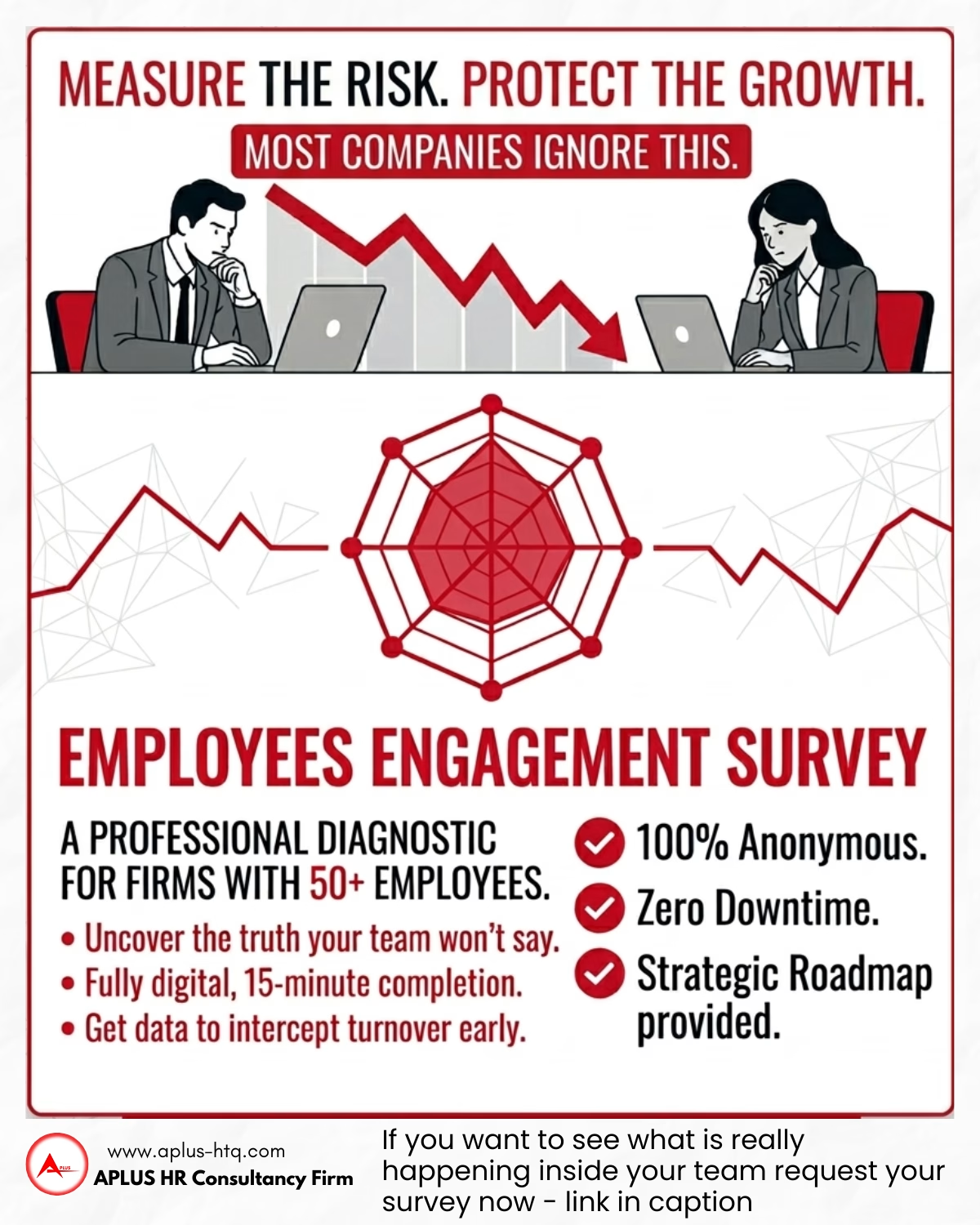
Why Employee Engagement Survey could save your Business in Egypt

Employee disengagement is a hidden threat silently eating away at productivity, retention, and company culture. In Egypt, whether you run a small tech startup in Cairo or a large manufacturing firm in Alexandria, disengaged employees cost far more than just salaries—they cost time, efficiency, and long-term growth.

Many business owners mistake “engagement” for perks like team outings or occasional bonuses. However, real engagement runs deeper. It’s about understanding what your workforce truly feels, what drives them, and where your organization may be falling short. This is exactly what an Employee Engagement Survey delivers.

What is an Employee Engagement Survey?

An Employee Engagement Survey isn’t just a formality—it’s a diagnostic tool for your company’s health. By definition, it collects structured feedback from employees to measure satisfaction, motivation, alignment, and overall engagement. Unlike casual feedback or manager impressions, a survey captures what employees actually experience day to day.

For instance, by asking the right questions, you can uncover:

  • Whether employees trust leadership
  • How clear their career growth paths are
  • If they feel valued and heard
  • Whether workload and work-life balance are sustainable
  • How aligned they are with company goals
  • Where team collaboration or recognition systems are failing

In short, an Employee Engagement Survey gives you a data-driven view of your workforce, helping you understand not just whether employees are satisfied, but whether they are motivated, committed, and performing at their best.
Key areas measured in an Engagement Survey

A professional survey explores multiple dimensions that directly impact performance and retention. Specifically, these include:

  • Trust in Leadership: Do employees believe management acts with integrity and fairness?
  • Career Development: Are there clear growth opportunities within the company?
  • Feeling Valued & Heard: Does feedback lead to action?
  • Work-Life Balance: Are employees able to manage workloads without burnout?
  • Alignment with Company Goals: Do employees understand and support your mission?
  • Team Collaboration & Communication: Are teams working efficiently together?
  • Recognition & Rewards: Are contributions acknowledged and celebrated?
  • Job Satisfaction & Motivation: Are employees inspired to perform at their best?
  • Culture & Morale: Does the workplace foster trust, respect, and collaboration?
  • Innovation & Autonomy: Are employees empowered to share ideas and take initiative?
  • Feedback & Performance Management: Are expectations clear and feedback regular?

Additionally, these areas help leaders identify hidden problems before they escalate, allowing targeted interventions.

The Engagement Matrix

DimensionWhy It Matters
Growth PotentialKeeps top talent from being headhunted
Management TrustReduces workplace friction and internal politics
Culture & MoraleBuilds a brand that attracts elite candidates
RecognitionImproves motivation and retention
Work-Life BalanceReduces burnout and absenteeism

As a result, this matrix provides a quick view of engagement priorities and guides effective interventions.

Why Employee Engagement Surveys are vital

1. Boost Productivity – Employees who feel understood and supported don’t just work—they excel. Surveys help remove invisible obstacles slowing them down.

2. Drastically Reduce Turnover – Replacing skilled employees is costly. Therefore, early identification of disengagement allows intervention before resignations occur.

3. Enhance Company Culture – Surveys reveal your workplace’s true DNA. In addition, use this data to cultivate a culture of respect, recognition, and collaboration that makes you an “Employer of Choice.”

4. Data-Driven HR Decisions – Stop guessing. Instead, use concrete insights to design training programs, reward systems, and performance management strategies.

Real-Life Success: A Cairo Tech case study

A mid-sized tech company in Cairo noticed rising turnover and declining morale. Employees felt unclear about career progression, lacked recognition, and were unsure if leadership valued their input.

As a result of conducting an Employee Engagement Survey, the company discovered the root causes and took action:

  • Implemented clear development plans
  • Introduced a monthly recognition program
  • Improved internal communication

Consequently, within six months, satisfaction scores jumped by 35%, and voluntary turnover dropped by 40%. The survey transformed disengagement from a hidden risk into a competitive advantage.

Designing your survey for maximum impact

To ensure meaningful results, follow these principles:

  • Keep it Concise: Respect employees’ time to increase completion rates.
  • Ensure Absolute Confidentiality: Employees only share honest feedback when they feel safe. Therefore, a third-party platform can guarantee anonymity.
  • Take Action: Surveys without follow-up are just paper. Hence, communicate findings transparently and demonstrate real change.

Furthermore, regular surveys allow you to track improvements, measure ROI, and continuously optimize your HR strategy.

Take Action: Protect Your Business Today

Every month that disengagement goes unnoticed costs your business productivity, morale, and profit. Your next Employee Engagement Survey could uncover the gaps that save your next quarter.

👉 Request Your Employee Engagement Insight Survey Now to make data-driven HR decisions, boost productivity, and retain your best talent.
The real reason your team resists change (and how to fix it)

Change is unavoidable in business. Companies introduce new processes, restructure teams, update internal rules, or roll out new HR policies to improve performance and stay competitive.

Yet despite good intentions, many organizations struggle with employee resistance to change. Plans slow down, engagement drops, and even simple initiatives become difficult to implement.

For business owners and HR leaders in Egypt, understanding why employees resist change—and how to manage it effectively—is critical to business success.


Resistance to change: It’s about Psychology, not Laziness

Many leaders assume employees resist change because they are lazy, unmotivated, or difficult. In reality, resistance is psychological. Employees are reacting to uncertainty, fear, or mistrust—not to the change itself.

Ignoring the human side of change is a common mistake in both small businesses and larger corporations in Egypt. For example:

  • A new HR policy may be introduced without clear explanation.
  • A digital workflow system may replace paper processes without proper training.
  • Managers may announce organizational restructuring without addressing employee concerns.

In all cases, employees may resist—not because they disagree with the change—but because they don’t feel informed, supported, or included.


6 common reasons teams resist change

Understanding why your team resists change is the first step to implementing solutions. Here are six key barriers:

1. Lack of understanding

When employees don’t know the why, they assume the worst. This is common with new HR rules or policy changes in Egypt, especially when communication is limited or unclear.

Example: Employees may resist a new attendance or leave policy if they don’t understand how it benefits the organization or themselves.


2. Fear of the unknown

Change introduces uncertainty. Employees worry about how it will affect their role, performance, workload, or even job security.

Tip: Leaders should clarify outcomes and explain how changes will affect day-to-day work.


3. Past bad experiences

Many teams in Egypt have experienced poorly managed change—projects that failed, policies that were imposed without explanation, or promises that weren’t followed through. Past experiences create skepticism toward new initiatives.

Tip: Acknowledge previous failures and explain how the new change will be different.


4. Feeling overwhelmed

Teams already juggling multiple priorities may view new initiatives as “extra work.” Overloading employees is a common cause of passive resistance.

Tip: Introduce change gradually and provide support to avoid burnout.


5. Broken communication

Resistance increases when messages aren’t clear, frequent, or two-way. Employees need the opportunity to ask questions, provide feedback, and express concerns.

Tip: Use multiple channels—emails, meetings, or even WhatsApp groups (common in Egypt)—to communicate clearly.


6. Lack of trust

Trust is fundamental. Employees who doubt leadership’s motives—or the organization’s ability to follow through—will resist any new initiative. This can be particularly sensitive in hierarchical business cultures, where employees may hesitate to speak up.

Tip: Build trust through transparency, consistent actions, and by involving employees in decision-making.


How resistance impacts Businesses

Resistance isn’t just an HR problem—it affects the entire organization:

  • Reduced productivity and efficiency
  • Increased errors and compliance risks
  • Low employee engagement and morale
  • Higher turnover, especially for high performers
  • Failed implementation of HR policies or business strategies

For Egyptian companies, where workforce dynamics can be complex and labor laws strict, resistance can have real operational and financial consequences.


The Fix: Lead with the “Why”

Successfully managing change is not about enforcing compliance. It’s about addressing the psychology behind resistance.

Here’s how leaders and HR can reduce pushback:

  1. Explain the “why” first – Employees need to understand the purpose and benefits of the change.
  2. Communicate early and often – Provide clear, consistent messages through multiple channels.
  3. Involve employees in the process – Participation increases buy-in.
  4. Provide training and support – Ensure your team has the tools to succeed.
  5. Listen actively – Acknowledge concerns and address them.
  6. Build trust – Deliver on promises, follow through, and demonstrate fairness.

When done properly, resistance decreases, and employees become partners in change—not obstacles.


Change Management in the Egyptian Business context

In Egypt, organizational culture and workforce dynamics can make change management uniquely challenging:

  • Hierarchical structures may discourage open feedback.
  • Small business owners may introduce changes informally, leading to confusion.
  • Labor law compliance requires careful communication, especially for HR policies.

By understanding these nuances and applying psychology-based change strategies, Egyptian businesses can implement HR policies, business rules, or process improvements effectively, avoiding frustration and resistance.


Final thoughts

Employee resistance is not a sign of failure—it’s a signal. Resistance highlights areas where communication, trust, or understanding is missing.

Whether you are rolling out new HR policies, improving workflows, or implementing strategic changes, focusing on the human side of change is critical.

Leaders who recognize the psychology of resistance, communicate the why, and build trust will see faster adoption, higher engagement, and stronger business results.


Need help implementing HR policies or managing change in your business? Our HR consultancy in Egypt helps companies navigate change, build trust, and improve workforce adoption.

Contact us today for a consultation.

Click to book your: HR consultancy services in Egypt

January: The most strategic month to fix HR problems that hold your Business back

January is more than just the start of a new calendar year. For business owners and senior leaders, it is a strategic pause that allows reflection, planning, and correction. While many organizations focus on sales targets and operational budgets at this time, the most successful companies take a different approach: they use January to strengthen their HR foundations. Experience shows that unresolved HR issues rarely disappear on their own. Instead, they resurface throughout the year as performance problems, turnover, compliance risks, and managerial frustration.

As January progresses, many businesses start to realize that old HR problems are already resurfacing—this is the right moment to act before they become harder to control. Addressing HR in mid-January creates clarity, alignment, and stability for the rest of the year. When people systems are clear, business decisions become easier, execution improves, and growth becomes sustainable rather than chaotic.


Why January is the right time for an HR reset

January offers a rare opportunity to review the business objectively, without the pressure of ongoing targets and deadlines. Leaders can finally see patterns that were invisible during the rush of daily work. Projects that stalled, teams that struggled to deliver, repeated conflicts between managers and employees, and high turnover in key roles all point to one underlying issue: weak or outdated HR systems.

An HR reset in January allows companies to:

  • Identify recurring people-related problems – addressing root causes rather than surface-level symptoms prevents recurring disruptions.
  • Align HR systems with business strategy – ensuring roles, processes, and expectations support growth instead of blocking it.
  • Prevent costly issues later in the year – avoiding high turnover, employee disputes, and compliance risks before they escalate.

Ignoring HR in January means these problems will resurface throughout the year, costing time, money, and energy.


Reviewing HR Policies: creating clarity and consistency

Many organizations operate with outdated HR policies that no longer reflect how the business actually works. Others rely on unwritten rules, leaving managers to make decisions based on personal judgment rather than clear guidelines.

In mid-January, HR policies should be reviewed to ensure they:

  • Comply with Egyptian labor law – reducing legal exposure and protecting the organization from penalties or disputes.
  • Reflect current working practices – including attendance rules, remote work arrangements, and disciplinary procedures.
  • Provide clear guidance for managers – enabling consistent decision-making across departments.

Updated and well-communicated HR policies reduce confusion, limit conflicts, and help employees understand what is expected of them, improving trust and fairness across the organization.


Evaluating Performance: Understanding what really went wrong

January performance discussions often fail because they focus only on outcomes rather than causes. When results are disappointing, managers may label employees as underperformers without examining whether expectations were clear or achievable.

A structured performance review process in January should focus on:

  • Assessing whether job roles and responsibilities were clearly defined, as unclear roles often lead to poor performance.
  • Evaluating the effectiveness of existing KPIs, ensuring they measured real work rather than subjective opinions.
  • Identifying systemic issues, such as workload imbalance or lack of supervision, that affected results across multiple employees.

This approach shifts the conversation from blame to improvement and allows organizations to redesign performance systems that genuinely support productivity.


Resetting KPIs to support business objectives

One of the most common HR gaps revealed in January is poorly designed KPIs. Vague or generic KPIs fail to guide employees and make performance evaluation stressful for both managers and staff.

Effective KPIs for the new year should:

  • Be specific and measurable – allowing employees to clearly understand what success looks like in their role.
  • Reflect actual job responsibilities – ensuring that employees are evaluated based on work they can control.
  • Link individual performance to business goals – helping employees see how their efforts contribute to company success.

Clear KPIs improve accountability, reduce conflict during appraisals, and create a shared understanding of priorities across the organization.


Planning Recruitment before it becomes urgent

Recruitment problems rarely start at the moment of resignation; they usually begin months earlier when workload increases or skills gaps are ignored. January provides the ideal moment to plan recruitment strategically rather than reactively.

Manpower planning in January should include:

  • Analyzing current workload and future growth plans – to identify roles that may become overstretched.
  • Identifying critical positions and key skills – especially those that are difficult to replace quickly.
  • Deciding early on recruitment or outsourcing options – reducing the pressure and cost of last-minute hiring.

Early planning leads to better hiring decisions, lower recruitment costs, and stronger team stability throughout the year.


Designing Training that solves real problems

Training is often treated as a routine activity rather than a strategic tool. When training programs are not linked to performance gaps, they fail to deliver measurable results.

An effective January training plan should:

  • Address gaps identified during performance reviews – ensuring that training responds to real business needs.
  • Focus on managers and supervisors – as leadership capability has a direct impact on team performance.
  • Align training with upcoming business changes – such as system upgrades, expansion, or restructuring.

When training is aligned with strategy and performance, it becomes an investment rather than an expense.


Strengthening Employee Engagement from the start of the year

Employee engagement is shaped early in the year by the level of clarity and communication employees receive. January sets the tone for how people feel about their roles and their future within the organization.

Organizations that prioritize engagement in January focus on:

  • Clear communication of goals and expectations – reducing uncertainty and anxiety among employees.
  • Consistent management practices – ensuring that rules and decisions are applied fairly.
  • Regular feedback and recognition – helping employees feel valued and supported.

Engaged employees are more productive, more loyal, and more willing to support business change.


Ensuring Compliance and reducing Legal Risk

Many labor disputes arise from unclear procedures rather than intentional violations. Mid-January is the ideal time to review HR compliance before problems escalate.

A compliance review should cover:

  • Employment contracts and documentation – ensuring they meet legal requirements.
  • Disciplinary and termination procedures – to avoid costly disputes and reputational damage.
  • Attendance, overtime, and leave practices – ensuring consistency and transparency.

Preventive compliance work in January protects both the business and its leadership.


Conclusion: January sets the tone for the entire year

January is not simply a planning month; it is a strategic moment to reset your HR systems for the year ahead. Companies that use this period to strengthen HR systems create stability, improve performance, and support sustainable growth. Those that delay HR decisions often spend the rest of the year managing avoidable problems.

At APLUS, we help businesses use January strategically by building practical HR systems that align people, performance, and compliance with business goals. Our HR consultation services are designed to support long-term success, not short-term fixes.

If you want this year to run smoother, start with HR in January. Contact us today to schedule an HR consultation.