Industry: Manufacturing (Textile industry preferred)
Job Purpose
We are looking for a skilled HR Specialist with solid experience in a manufacturing setup—preferably within the textile industry. The candidate will be responsible for supporting HR operations, ensuring compliance with labor laws, and driving initiatives that enhance employee performance and engagement.
Key Responsibilities
-Manage HR daily operations
-Support recruitment function
-Ensure full compliance with Egyptian labor law, insurance, and company policies.
-Handle employee relations, conflict resolution, and provide guidance to managers.
-Prepare HR reports and maintain accurate HR databases and records.
-Collaborate with production and management teams to meet operational needs.
Qualifications & Requirements
-Bachelor’s degree in Business Administration, HR, or related field.
-4–5 years of proven experience as HR Specialist in a manufacturing environment (Ready made garments industry is highly preferred).
-Fluent in English (written and spoken).
-In-depth knowledge of Egyptian labor law and social insurance.
-Strong communication, problem-solving, and organizational skills.
-Proficiency in HR systems (ODOO) and MS Office.
-Ability to adapt in a fast-paced, production-oriented environment.
The Production Supervisor will oversee daily production operations in the jackets and trousers department, ensuring targets are met in terms of quality, efficiency, and timelines. The role requires hands-on leadership, problem-solving skills, and the ability to manage workers effectively to achieve production goals.
Key Responsibilities:
Supervise and manage production lines for jackets and trousers.
Monitor daily production output and ensure adherence to production plans.
Coordinate with the production manager, quality control, and maintenance teams to resolve issues quickly.
Ensure compliance with quality standards and minimize defects.
Manage and train operators to improve efficiency and workmanship.
Monitor machine utilization, workflow, and manpower allocation.
Maintain discipline, safety, and cleanliness on the production floor.
Prepare and submit daily/weekly production reports.
Qualifications & Requirements:
Bachelor’s degree or diploma in Textile Engineering, Garment Technology, or related field.
3–5 years of proven experience in supervising production lines (jackets or trousers manufacturing is a must).
Strong knowledge of garment production processes, sewing techniques, and industrial machinery.
Ability to handle a large team of operators and line leaders.
Strong problem-solving, communication, and leadership skills.
Basic computer skills (MS Office, ERP knowledge is a plus).
For our client, a leading manufacturer of power generators, we are hiring a Technical Sales Engineer with 2–3 years of experience.
The ideal candidate will handle the full sales cycle, provide technical support to clients, and recommend tailored generator solutions based on customer needs.
Key Responsibilities:
Identify and pursue new sales opportunities.
Understand client requirements and recommend suitable generator models.
Prepare and deliver technical proposals and quotations.
Provide pre- and post-sales support.
Collaborate with internal teams to deliver customized solutions.
Attend industry events to promote products.
Maintain accurate sales reports and records.
Requirements:
Bachelor’s degree in Mechanical, Electrical, or Power Engineering.
2–3 years of technical sales experience (preferably in power generation).
Strong understanding of power generators and applications.
In today’s competitive market, managing your people efficiently is critical for success. But without the right data, even the best HR strategies can fall short. Tracking key HR metrics helps business owners make informed decisions, reduce costs, improve employee satisfaction, and strengthen company culture.
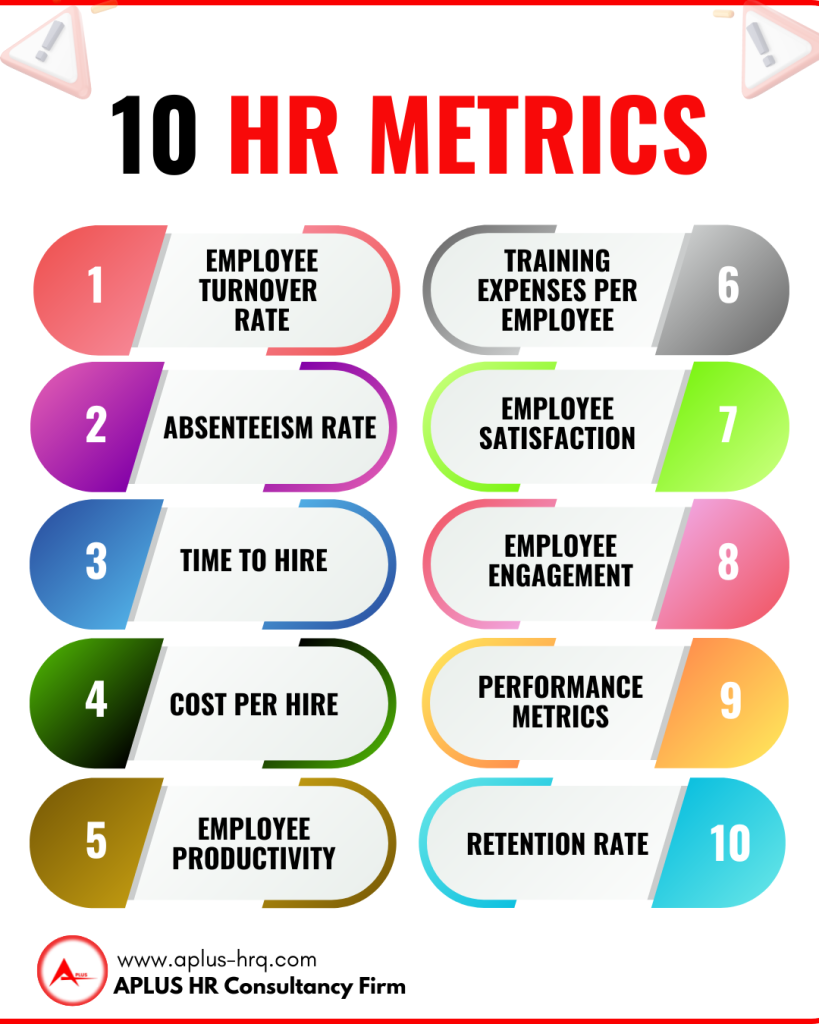
At APLUS HR Consultancy, we strongly recommend you monitor these 10 important HR metrics to protect and grow your business:
1. Employee Turnover Rate
Employee turnover rate measures the number of employees who leave your company during a specific period, whether voluntarily or involuntarily. A high turnover rate can indicate dissatisfaction, poor management practices, lack of growth opportunities, or cultural issues. Tracking this metric allows you to identify root causes early and create strategies to retain your best talent — saving money on recruitment and training costs.
Tip: Aim for a turnover rate lower than your industry average to stay competitive.
2. Absenteeism Rate
Absenteeism rate shows how often employees are absent from work without a valid reason. Frequent absenteeism can affect team productivity, increase workload for other employees, and hurt company morale. By monitoring this rate, you can identify if absenteeism is due to poor engagement, health issues, or workplace dissatisfaction, and implement corrective measures.
Tip: Offering flexible working hours or wellness programs can help reduce absenteeism.
3. Time to Hire
Time to hire is the number of days between posting a job opening and signing the employment contract with a candidate. Long hiring processes can result in losing top talent to competitors. By tracking this metric, you can assess the efficiency of your recruitment process and make necessary improvements to attract and hire faster.
Tip: Streamline interviews and decision-making to shorten your time to hire.
4. Cost per Hire
Cost per hire refers to the total expense involved in hiring a new employee. This includes advertising costs, recruiter fees, candidate assessments, onboarding, and training expenses. Tracking this metric helps you manage your recruitment budget wisely and find ways to optimize hiring costs without compromising candidate quality.
Tip: Investing in a strong employer brand can lower your cost per hire over time.
5. Employee Productivity
Employee productivity measures the output of employees over a set period, often compared against goals or targets. High productivity means your team is working effectively, while low productivity may highlight issues such as poor training, low morale, or unclear expectations. Monitoring productivity helps you recognize top performers and identify teams or individuals who may need support.
Tip: Clear goal-setting and regular feedback can significantly boost productivity levels.
6. Training Expenses per Employee
Training expenses per employee measure how much you invest in developing each employee’s skills and knowledge. While training involves costs, it’s an important investment that leads to higher productivity, better job satisfaction, and improved employee retention. Tracking this metric ensures your training budget is effective and aligned with your business goals.
Tip: Focus on training programs that have a direct impact on your company’s performance.
7. Employee Satisfaction
Employee satisfaction reflects how happy and fulfilled your employees feel at work. Satisfied employees are more likely to stay longer, perform better, and promote a positive workplace culture. You can measure satisfaction through regular surveys, feedback sessions, and one-on-one interviews.
Tip: Take action based on survey results — employees appreciate when their voice leads to real changes.
8. Employee Engagement
Employee engagement measures the emotional commitment employees have toward their work and your company. Engaged employees are motivated, innovative, and willing to go the extra mile. Tracking engagement levels helps you create strategies to boost morale and loyalty, which in turn impacts business results positively.
Tip: Recognition programs and career development opportunities can significantly boost engagement.
9. Performance Metrics
Performance metrics evaluate how well employees achieve their set goals and contribute to company objectives. By consistently measuring performance, you can identify high performers, reward success, address underperformance early, and align everyone towards shared goals.
Tip: Set clear, measurable KPIs (Key Performance Indicators) for every role in your company.
10. Retention Rate
Retention rate measures the percentage of employees who stay with your company over a given period. A high retention rate suggests a healthy workplace culture, effective management, and good job satisfaction. Retention is critical because replacing employees is expensive and disruptive.
Tip: Focus on career growth, fair pay, and work-life balance to improve retention.
Why Tracking HR Metrics is Critical for Your Business
Tracking HR metrics is not just about numbers — it’s about understanding your workforce and building a strong, future-proof company. With these insights, you can:
Reduce hiring and training costs
Build a stronger, more loyal team
Improve employee satisfaction and engagement
Boost productivity and overall business performance
Make smarter, data-driven HR decisions
At APLUS HR Consultancy, we help businesses like yours track and analyze the right HR metrics. We design customized HR solutions that match your company’s size, industry, and specific needs — whether you’re a startup, SME, or large corporation.
Ready to take control of your HR performance?
Contact APLUS HR Consultancy Today! We are your trusted HR partner in Egypt, helping businesses thrive through strategic and tailored HR solutions.
Call us or Message us now for a free consultation!
Location: Badr City, Cairo, Egypt Industry: Heavy Industry Experience: Min. 3 Years Employment Type: Full-Time
Job Summary:
We are seeking an experienced Mechanical Engineer with 3 years of experience in heavy industry. This role involves designing, maintaining, and optimizing industrial machinery and equipment to ensure efficient operations and continuous improvement. Knowledge of diesel engines is required.
Key Responsibilities:
Design & Development: Create and test mechanical systems and components for heavy industry applications.
Maintenance & Troubleshooting: Oversee maintenance, repair, and optimization of machinery, with a focus on diagnosing and resolving diesel engine issues.
Project Management: Lead engineering projects from initiation to completion, ensuring they are delivered on time and within budget.
Process Improvement: Identify areas for operational improvement and implement solutions to enhance efficiency and reliability.
Safety & Compliance: Ensure all work complies with health, safety, and environmental regulations.
Qualifications:
Bachelor’s degree in Mechanical Engineering.
3 years of experience in the heavy industry.
Strong knowledge and hands-on experience with diesel engines.
Proficiency in CAD software.
Strong problem-solving, project management, and communication skills.
Solid understanding of safety regulations in heavy industry.
For our customer we are looking for an experienced Senior Store Keeper. The primary responsibilities include storing materials, and efficiently picking and packing orders to maintain stock accuracy and meet service levels.
Job location: Cairo
Responsibilities:
Prepare and complete orders for delivery or pickup according to schedule (load, pack, wrap, label, ship).
Receive and process warehouse stock products (pick, unload, label, store).
Perform inventory controls and maintain high standards for audits.
Maintain a clean and safe working environment and optimize space utilization.
Report any discrepancies in inventory to management.
Communicate and cooperate with the stock keeping manager and other team members.
Operate and maintain warehouse vehicles and equipment preventively.
Adhere to quality service standards and comply with all procedures, rules, and regulations.
Requirements and Skills:
Proven experience as a Store Keeper, with a strong track record in warehouse operations.
Excellent organizational and time management skills.
Ability to lift heavy objects and engage in physical labor.
High school diploma or equivalent.
Good communication skills and the ability to work well with others.
Knowledge of warehouse software packages and MS Office proficiency is a plus.