Essential HR Features for Egyptian SMEs Over 20 Employees
Ready to scale? Make sure HR doesn’t hold you back.

Hiring your 21st employee should be a milestone, not a mistake.

In Egypt, many businesses focus on sales and operations while ignoring HR. But as your team grows, so do your risks — from legal penalties and unstructured hiring to low performance and employee turnover. If your HR system isn’t ready, your growth will create more chaos than results.

This guide will walk you through the 4 critical elements your HR system must have to scale beyond 20 employees smoothly and legally — based on the Egyptian labor law and real-life business scenarios.

As your company grows, ensure your policies are up to date. Don’t miss our in-depth guide on 15 HR Policies You Can’t Ignore in 2025 — it’s full of essential rules every team needs before scaling further.


1. Clear HR Processes

You cannot manage what isn’t written down.

At 5–10 employees, informal processes may work. But at 20+, a missing leave policy or messy onboarding process will waste hours of your time — and frustrate both employees and managers.

Your HR process checklist should include:

  • ✅ Hiring steps (from job ad to offer letter)
  • ✅ Onboarding checklist (documents, welcome, system access)
  • ✅ Attendance, late arrivals, absence requests
  • ✅ Leave policy: how to apply, approve, and track
  • ✅ Offboarding process: resignations, exit clearance

Why it matters:
Without clear HR processes, each task becomes a source of conflict and delay. Managers guess. Employees complain. You lose control. With structure, everyone knows what to do and when.

👉 Tip: Use visual SOPs (standard operating procedures) and digital tools like Google Forms, Trello, or low-cost HR software to standardize your operations.


2. Updated Employee Files

Messy or missing files? That’s a serious compliance risk in Egypt.

The labor office can inspect your company at any time. If files are incomplete, outdated, or not stored properly, you may face penalties — even lawsuits.

Your updated employee file must include:

📁 Legal & Personal Documents

  • National ID (or passport for expats)
  • Birth certificate, military certificate (for Egyptian men)
  • Educational degrees and CV
  • 6 personal photos
  • Work permit and visa (for foreign employees)

📁 Official Employment Documents

  • Triplicate Arabic labor contract (signed)
  • Job description and KPIs (signed)
  • Social Insurance Form 1 (registration)
  • Form 111 (pre-employment medical exam – new legal requirement)

📁 HR Records

  • Attendance, leave balance, absence records
  • Disciplinary letters, evaluations, training records
  • Payroll data: salary breakdown, overtime, bonuses
  • Resignation/termination forms and end-of-service clearance

Why it matters:
Your employee file is your legal shield. If something goes wrong — a dispute, a resignation, or a labor inspection — these files protect you.

👉 Tip: Store files digitally using secure drives or HR software, but keep physical copies too. Legally, you must retain all employee documents for 5 years after exit.


3. Labor Law Compliance

Many businesses in Egypt “think” they’re compliant… until a problem proves otherwise.

Egyptian Labor Law (especially after Law No. 14 of 2025) has strict rules on contracts, working hours, leave, termination, and more. One wrong step can cost your business thousands.

Your HR compliance checklist should cover:

  • ✅ Legal contract format (Arabic, correct type, correct clause)
  • ✅ Maximum working hours and overtime calculation
  • ✅ Accurate leave management: annual, sick, maternity
  • ✅ Proper warning system (verbal, written, termination steps)
  • ✅ Childcare rights, breastfeeding breaks, female employee protection
  • ✅ Correct social insurance onboarding (Form 1) and health check (Form 111)

Why it matters:
Non-compliance can lead to fines, lawsuits, labor court cases, or employee claims. Even if you win a case, the time and cost are high.

👉 Tip: Don’t copy contracts from Google. Work with an HR legal expert who understands Egyptian law and updates your documents regularly.


4. HR KPIs to Track Performance

If you don’t measure your team’s performance, you’ll always be reacting instead of improving.

Whether or not you have a full HR team, every growing business must track basic HR metrics. These numbers help you fix problems early and support better decisions.

Start with these 5 simple HR KPIs:

  • 📊 Employee Turnover Rate
  • 📊 Absenteeism Rate
  • 📊 Time to Hire
  • 📊 Training Hours Per Employee
  • 📊 Employee Satisfaction Score (optional)

Why it matters:
KPIs give you visibility. If turnover is rising, it’s time to fix onboarding. If hiring takes 40 days, you need a faster process. Without KPIs, you’re operating in the dark.

👉 Tip: Track KPIs monthly in a simple Excel sheet, then upgrade to free or low-cost software as you grow.


Summary: Build the HR Foundation Before You Build Your Team

Crossing the 20-employee mark is a huge step. It also brings huge responsibility.

Don’t wait until mistakes happen. A strong HR system reduces legal risks, saves money, builds employee trust, and improves your business performance.

✅ Your 4-part HR foundation:

  1. Clear HR Processes
  2. Complete & Organized Employee Files
  3. Full Compliance with Egyptian Labor Law
  4. HR KPIs to Track & Improve Performance

If you’re missing one of these areas, your business is at risk — and growth will only make the problem bigger.

Wondering if your current HR system measures up? We recommend conducting an HR Audit & Assessment to spot gaps, fix compliance issues, and strengthen your HR foundation.


Get Your Free HR System Audit (Egypt-Only)

We help companies in Egypt build smart, compliant HR systems so they can grow confidently.

Book a free HR system review tailored to your company.

The #1 HR Mistake that puts your Business at risk!

Running a business isn’t easy. Between managing clients, growing sales, and leading a team, most business owners already have their hands full. But there’s one area that often gets pushed to the bottom of the priority list — and it could be the costliest mistake you ever make: HR compliance.

When businesses fail to comply with labor law, the consequences aren’t just administrative. They can be financial, legal, and reputational. Yet many companies unknowingly make this critical mistake, believing their current setup is “good enough.”

In this blog post, we dive deep into why labor law compliance is not optional, what non-compliance really looks like, the long-term impact it can have on your company, and what you can do to protect your business before it’s too late.

What Is HR Compliance?

HR compliance refers to the process of aligning your human resources practices with labor laws and regulations. This includes everything from employment contracts, working hours, and termination procedures to employee benefits, insurance registration, health and safety, and equal opportunity practices.

It sounds technical, but in simple terms: compliance is what protects your business from employee-related legal issues.

Key Components of HR Compliance:

  • Recruitment and Hiring: Ensuring fair and legal hiring practices.
  • Contracts and Onboarding: Issuing legally valid employment contracts and onboarding employees with the right documentation.
  • Working Conditions: Adhering to laws related to working hours, rest periods, wages, and health & safety.
  • Social Insurance and Benefits: Registering employees correctly and contributing to statutory benefits.
  • Disciplinary Procedures and Terminations: Following lawful and transparent procedures.
  • Record Keeping: Maintaining employee files, performance records, and attendance logs.

Why HR Compliance is essential for Business Survival

Here’s why it matters:

  • Legal Protection: Labor laws are designed to protect both employers and employees. Complying with them ensures you are protected in disputes or inspections.
  • Employee Trust: Transparent, fair policies help create a positive work culture and boost retention.
  • Reputation: Non-compliance cases, even when unintentional, can damage your brand in the eyes of both clients and employees.
  • Operational Stability: Having clear, legal procedures for hiring, discipline, and termination reduces chaos and keeps your operations running smoothly.

Compliance isn’t just a box to tick. It’s the foundation for sustainable, ethical, and risk-free growth.

The #1 HR Mistake: Ignoring Labor Law Compliance

Based on our consultation work with hundreds of companies, the most common and dangerous HR mistake is non-compliance with labor laws.

Business owners may think: “We’re small, the law doesn’t apply to us,” or “We’ve never had any problems so far.” But labor law applies to all businesses, regardless of size or industry.

Common forms of Non-Compliance

  • No Signed Employment Contracts: Verbal agreements are not recognized in court. Every employee must have a documented, legally compliant contract.
  • No Social Insurance Registration: This is a legal obligation. If you’re not registering your employees, you’re already at risk.
  • Incorrect Termination Procedures: Labor law sets specific rules for disciplinary actions and termination. Not following these steps can lead to legal claims.
  • Missing or Outdated Internal Policies: HR policies should be aligned with legal standards, updated regularly, and clearly communicated.
  • No Attendance and Overtime Records: Employers must maintain detailed records to comply with labor law requirements. Without this, you cannot defend yourself in disputes.
  • Untrained Line Managers: Supervisors who don’t understand labor law often commit violations unknowingly.
  • No Compliance Audits: Without regular audits, it’s difficult to identify areas of risk before they become a problem.

The hidden costs of non-compliance

You might not see the consequences immediately, but the costs of ignoring compliance can be devastating.

1. Legal Disputes and Court Cases

Employees who feel mistreated or unfairly terminated can file labor complaints. Even if you win, legal defense takes time, money, and energy. In some cases, courts rule in favor of the employee simply because the company lacks proper documentation.

2. Fines and Penalties

Government inspections can result in heavy penalties for non-compliance. For example, missing social insurance registration or not having valid contracts are considered serious violations.

3. Business Disruption

A single labor dispute can disrupt your operations for weeks. If a key employee files a complaint, or your team feels unsafe or unsupported, productivity drops and trust is lost.

4. Reputation Damage

In the digital age, bad reviews from ex-employees spread quickly. Whether on social media or employment review sites, these public complaints hurt your ability to attract top talent and clients.

5. High Employee Turnover

When HR practices are inconsistent or unfair, employees are more likely to leave. This creates additional recruitment costs and knowledge gaps in your business.

6. Low Morale and Engagement

Employees who sense unfairness, favoritism, or lack of clear processes become disengaged. They may do the bare minimum or quietly search for a job elsewhere.

7. Lost Opportunities

Some clients, especially international partners, require proof of HR compliance before signing long-term contracts. Failing to meet basic legal requirements can cost you lucrative business opportunities.

Statistics that highlight the issue

  • A global survey by PwC found that 31% of businesses have faced employment-related legal issues in the last two years.
  • In Egypt and many other countries, labor inspections have increased in frequency, especially post-pandemic, with a focus on employee registration and contract enforcement.
  • Studies show that companies with weak HR compliance are 3 times more likely to face employee disputes or lawsuits.
  • According to LinkedIn data, companies with strong HR systems and compliance structures experience 22% higher employee retention over 24 months.
  • A study by Deloitte shows that 62% of businesses without a compliance officer or HR consultant face difficulties during labor inspections.

What Business Owners need to understand

You may think compliance is a legal matter, but in reality, it’s a business survival strategy.

Whether you have 5 employees or 500, the rules apply to you. Labor law does not differentiate based on your company’s size, your industry, or your revenue.

And ignorance is not a defense. Saying, “I didn’t know” will not protect you in court or during a labor inspection.

Many business owners only realize the importance of compliance after they face their first problem — a labor lawsuit, a fine, or a conflict they can’t resolve legally.

The good news is: you can prevent all this.

Key Takeaway:

Every day you operate without full HR compliance, you’re gambling with your company’s future.

Summary: Don’t wait for a crisis to act

Non-compliance with labor law is not just an HR issue. It’s a leadership issue. It’s a business risk. And it’s completely preventable.

Taking time now to ensure your contracts, policies, and processes align with legal requirements will save you time, money, and stress down the line.

You don’t need to wait for an employee complaint or government inspection to fix your HR system. In fact, that’s the worst time to start.

Start today. Review your practices. And if you need help, ask an expert.

Compliance isn’t just about following rules — it’s about building a stable, trustworthy, and successful business.


Need Support? Let Us Help

We specialize in helping businesses like yours stay compliant, reduce risk, and build strong HR foundations. Our team of experienced consultants can audit your current HR processes, identify legal gaps, and help you implement solutions that keep your business protected.

Contact us today for a free HR compliance check-up.

We’ll walk you through what’s missing, what needs updating, and how to create a safer, more efficient, and legally secure workplace.

Because protecting your people also protects your business.

HR Audit & HR Assessment: what it is and why you need it

In today’s competitive business world, success depends not only on sales and operations—but also on how well your people are managed. Human Resources (HR) is more than just paperwork and payroll. It’s the backbone of business compliance, employee satisfaction, and organizational growth.

Yet many business owners in Egypt unknowingly operate with outdated, non-compliant, or incomplete HR systems. They rely on instinct instead of strategy, or assume that “no news” from the HR team means everything is fine.

Unfortunately, this mindset can lead to serious problems:
❌ Labor law violations
❌ Poor hiring decisions
❌ High employee turnover
❌ Legal disputes
❌ Financial penalties
❌ Demotivated staff

That’s why conducting a professional HR Audit and HR Assessment is no longer optional—it’s a critical step to protect your business, improve efficiency, and build a strong, compliant, and productive workplace.

Whether you’re a startup, a small business, or a growing enterprise, understanding where your HR stands—and how to improve it—can save you time, money, and stress.


What is an HR Audit?

An HR Audit is a structured, formal review of your current HR documentation, policies, procedures, and practices to ensure they are legally compliant, consistent, and aligned with business needs.

It examines:

  • Employment contracts
  • Company policies
  • Payroll and benefits
  • Employee records
  • Legal compliance with Egyptian Labor Law

An HR audit identifies gaps, risks, and inefficiencies in your HR function so that you can fix them before they become legal or operational issues.


What is an HR Assessment?

An HR Assessment goes deeper than compliance. It evaluates the effectiveness and quality of your HR practices—how they support your workforce, improve productivity, and align with your company’s goals.

It includes:

  • Recruitment quality
  • Employee engagement
  • Performance management
  • Training and development programs
  • Managerial leadership and team culture

Together, the audit and assessment give you a full picture:
Where you are today, what’s missing, and how to improve.


What’s included in an HR Audit & Assessment?

A full HR audit and assessment typically covers:

1. Contracts & Documentation

  • Employment contracts
  • Offer letters
  • Job descriptions
  • Termination letters
  • Employee files

2. HR Policies & Procedures

  • Leave and attendance
  • Disciplinary action
  • Overtime and working hours
  • Health & safety policies
  • Employee handbook

3. Recruitment & Onboarding

  • Interview process
  • Selection criteria
  • Onboarding checklist
  • Probation period structure

4. Performance & KPIs

  • Goal setting
  • Performance appraisals
  • KPI alignment
  • Reward and recognition systems

5. Payroll & Compensation

  • Salary structure
  • Overtime calculations
  • Social insurance compliance
  • Payroll documentation

6. Training & Development

  • Training needs analysis
  • Skills gap identification
  • Training plans and records

7. Legal Compliance

  • Egyptian Labor Law adherence
  • Legal risks in contracts or HR processes
  • Social insurance and tax alignment

Benefits of conducting an HR Audit & Assessment

  • Avoid Labor Law Penalties
  • Fix HR process errors before they grow
  • Boost employee productivity and trust
  • Professionalize your HR department
  • Support business expansion or restructuring
  • Make smarter HR decisions backed by data

When to conduct an HR Audit

You should consider an HR audit:

  • When starting a new business or hiring your first employees
  • After a company restructuring or management change
  • Before opening a new branch or expanding teams
  • When experiencing high turnover, poor performance, or employee dissatisfaction
  • Annually, as part of your risk management strategy

Real Risks of not auditing Your HR

  • Non-compliance with Egyptian Labor Law
  • Missing contracts or invalid clauses
  • Lack of documentation during disputes
  • Weak hiring or firing processes
  • Employee complaints escalating to court cases
  • Inefficient HR wasting company resources

A simple audit could prevent costly mistakes, legal action, and damaged company reputation.


What happens after the Audit?

Once the HR audit and assessment are completed, you receive:

  • A full diagnostic report
  • Gap analysis with risk level indicators
  • Priority action plan
  • Checklists and templates for improvement
  • Step-by-step guide to implement changes
  • Optional follow-up reviews (upon request)

Summary

SectionKey Points
What It IsAn HR audit checks compliance. An HR assessment checks effectiveness. Together, they show the full picture.
Why It MattersAvoid legal risks, improve HR operations, and support business growth.
When to Do ItDuring hiring, restructuring, performance issues, or annually.
What’s IncludedContracts, policies, KPIs, payroll, training, compliance, and more.
BenefitsReduced risk, improved processes, better decisions, legal protection, and happier employees.

Let’s Assess Your HR Today

If you’ve never conducted an HR audit—or it’s been more than a year—your business may be at risk without even knowing it.

Let us help you:

✅ Stay compliant
✅ Improve HR efficiency
✅ Protect your company from legal issues
✅ Build an HR system that supports growth

📩 Contact us today for a professional HR Audit & Assessment:

Why Employee Surveys are a business essential!

In today’s fast-moving business environment, companies across Egypt and beyond are realizing the value of putting their employees first. But how do you truly understand what your team needs, feels, or expects? How can you uncover the silent challenges that affect productivity, morale, and retention?

The answer is simple: employee surveys.

Far from being just a formality, employee surveys are one of the most effective and affordable tools for improving workplace performance, reducing turnover, and building a healthier, more engaged company culture.

In this in-depth guide, you’ll discover:

  • Why every business needs employee surveys
  • The benefits of running regular surveys
  • What questions you should ask (and why)
  • The most common survey mistakes
  • Why some companies think surveys don’t work
  • What to do after collecting employee feedback
  • How to build a results-driven employee survey with expert help

Why Every Business Needs Employee Surveys

Employee surveys give you direct insight into the thoughts, feelings, and needs of your team. It’s a simple but powerful way to understand how employees perceive their work, leadership, culture, growth opportunities, and more.

Key Benefits of Employee Surveys:

  1. Identify hidden problems before they turn into resignations
  2. Understand what motivates your team and what holds them back
  3. Pinpoint weak areas in communication, management, or company culture
  4. Strengthen decision-making with real employee data
  5. Improve employee retention, satisfaction, and engagement

Many companies in Egypt struggle with high employee turnover, low motivation, and unclear HR strategies. A well-planned employee survey can help you stop guessing and start making data-backed decisions.

Remember: you can’t fix what you can’t see.


Ask the Right Questions

A common mistake many businesses make is using a generic, one-size-fits-all survey. These often produce vague responses or low participation. To gain real insight, you need to ask the right questions.

Here are 5 powerful questions every employee survey should include:

  1. Do you feel supported by your manager and team leaders?
    • This reveals leadership gaps and support issues that affect performance.
  2. Are you satisfied with your growth and development opportunities here?
    • Lack of career development is a top reason people leave companies.
  3. How would you describe the communication within your team/department?
    • Poor communication causes confusion, conflict, and inefficiency.
  4. Do you feel your contributions are recognized and appreciated?
    • Recognition is directly tied to motivation and engagement.
  5. What’s one thing you would change about your work experience here?
    • This open-ended question uncovers honest feedback you may not expect.

Customizing these questions to reflect your company’s structure, culture, and goals will give you deeper, more actionable feedback.


Common Mistakes That Make Surveys Useless

A poorly designed or managed survey can do more harm than good. It can damage employee trust, deliver inaccurate data, or lead to inaction.

Here are 3 common mistakes to avoid:

  1. Poorly framed questions – Avoid confusing, vague, or biased questions. Keep them clear and neutral.
  2. No follow-up – If employees don’t see any change after sharing feedback, they lose trust in the process.
  3. Lack of transparency – Share the results (even briefly) and your plan for improvement. This shows you value employee input.

Avoiding these mistakes is essential to building trust and driving real results.


HR Myth: “Employee Surveys Don’t Work”

This is one of the biggest misconceptions we hear from business owners.

The truth is: surveys don’t fail — poor planning fails.

If you send out random questions, never analyze the answers, and take no action, of course it won’t work.

But when employee surveys are done strategically — with clear goals, smart questions, and follow-up plans — they become one of the most effective HR tools you can use.


What to Do After You Get Survey Results

Collecting feedback is only step one. What comes next is where leadership truly begins.

Here’s what your process should look like:

  1. Analyze the results
    • Look for patterns, repeated issues, and critical feedback. Break it down by department, team, or level if needed.
  2. Communicate with your team
    • Share a summary of the results. Let employees know they were heard.
  3. Create a realistic action plan
    • Identify short-term quick wins and long-term improvements.
  4. Assign responsibility and timelines
    • Make sure managers and leaders are accountable for changes.
  5. Follow up with another survey
    • Reassess in 3-6 months to measure improvement and keep communication open.

This process builds trust, strengthens culture, and shows your people that feedback leads to change.


Summary

Employee surveys are a strategic tool to identify problems, improve communication, and drive employee engagement. When done correctly, they reveal valuable insights and allow companies to take action that truly improves the work environment and performance.

By avoiding common mistakes and using the right questions, businesses can turn feedback into measurable progress.

Don’t just collect feedback — use it to lead with confidence.


Employee surveys are not a luxury. They are a business necessity.

If you’re serious about improving productivity, retaining top talent, and building a great place to work, start by listening to your people. But don’t stop there — take action.

Want to learn more about how we can help?

Contact us today to build a custom employee survey that drives real results.

HR vs Admin: what’s the difference and why it matters for your Business!

Learn the key differences between Human Resources (HR) and Administration (Admin) and why both functions are essential for business success. An expert guide by a leading HR consulting firm in Egypt.


Introduction

In the world of business, clarity between functions is essential. One of the most common misconceptions we see as an HR consulting firm in Egypt is the confusion between Human Resources (HR) and Administration (Admin). While both roles are essential, they are not interchangeable.

Understanding the difference between HR and Admin helps business owners structure their teams better, improve efficiency, comply with labor laws, and create a productive work environment. In this blog post, we’ll explain the roles, responsibilities, and strategic importance of each function—and why your business needs both.


What is Human Resources (HR)?

Human Resources is a strategic department that focuses on managing your company’s most valuable asset—its people. HR plays a direct role in hiring the right talent, keeping employees engaged, ensuring compliance with labor laws, and helping businesses grow through effective workforce planning.

Key Responsibilities of HR:

  • Recruitment and onboarding
  • Payroll, social insurance, and labor law compliance
  • Employee engagement and retention
  • Conflict resolution and disciplinary actions
  • Training and development
  • Designing KPIs and performance management systems
  • Organizational development and job structuring
  • Driving and maintaining company culture

An experienced HR department doesn’t just solve problems—it prevents them.


What is Administration (Admin)?

Administration, on the other hand, refers to the coordination of office operations, logistics, and support functions. Admin ensures that your workplace runs smoothly. While HR focuses on people, Admin focuses on processes.

Key Responsibilities of Admin:

  • Managing office supplies and equipment
  • Overseeing facility maintenance
  • Coordinating travel and accommodations
  • Maintaining internal records and document control
  • Handling vendors and service providers
  • Scheduling meetings and supporting daily operations

Admin roles are often task-based and operational. They are critical to keeping the workplace efficient, but they do not include strategic planning or employee management.


HR vs Admin:

HR (Human Resources)Admin (Administration)
Manages recruitment and onboardingManages office operations and facility services
Handles payroll, benefits, and labor complianceCoordinates vendors and inventory
Drives employee engagement and conflict resolutionOrganizes travel and logistics
Delivers training and employee developmentMaintains general document control
Builds and sustains company cultureSupports administrative and operational tasks
Strategic function aligned with business growthOperational support function

Why the Difference Matters

Many small businesses operate without a dedicated HR department, delegating HR tasks to Admin staff. While this may work temporarily, it often leads to serious problems:

  • Labor law violations
  • Poor hiring decisions
  • Low employee engagement and high turnover
  • Inadequate training and performance tracking
  • Lack of HR documentation and structure

By understanding the difference, companies can avoid these pitfalls and invest in the right expertise.


Do You Need HR, Admin, or Both?

The answer is simple: you need both.

Admin ensures the office runs efficiently, but HR ensures your team is performing at its best. Without HR, there’s no structure to manage growth, retain employees, or align people with business strategy.

Whether you’re a startup or a growing enterprise, investing in a professional HR setup is no longer optional—it’s essential.


Final Thoughts

HR and Admin are both vital functions—but they serve different purposes. If your business is mixing them up, you’re likely missing out on growth opportunities and exposing yourself to legal and operational risks.

Investing in the right structure, with clear roles and responsibilities, will save you time, money, and stress.

📩 Contact us today to learn how our HR consulting firm in Egypt can build or upgrade your HR system—designed to help your business thrive.

Technical Sales Engineer

Job Summary:

For our client, a leading manufacturer of power generators, we are hiring a Technical Sales Engineer with 2–3 years of experience.

The ideal candidate will handle the full sales cycle, provide technical support to clients, and recommend tailored generator solutions based on customer needs.

Key Responsibilities:

  • Identify and pursue new sales opportunities.
  • Understand client requirements and recommend suitable generator models.
  • Prepare and deliver technical proposals and quotations.
  • Provide pre- and post-sales support.
  • Collaborate with internal teams to deliver customized solutions.
  • Attend industry events to promote products.
  • Maintain accurate sales reports and records.

Requirements:

  • Bachelor’s degree in Mechanical, Electrical, or Power Engineering.
  • 2–3 years of technical sales experience (preferably in power generation).
  • Strong understanding of power generators and applications.
  • Excellent communication and negotiation skills.
  • Ability to explain technical concepts clearly.
  • Self-driven and results-oriented.
  • Willingness to travel as needed.

Location: 5th Settlement/New Cairo

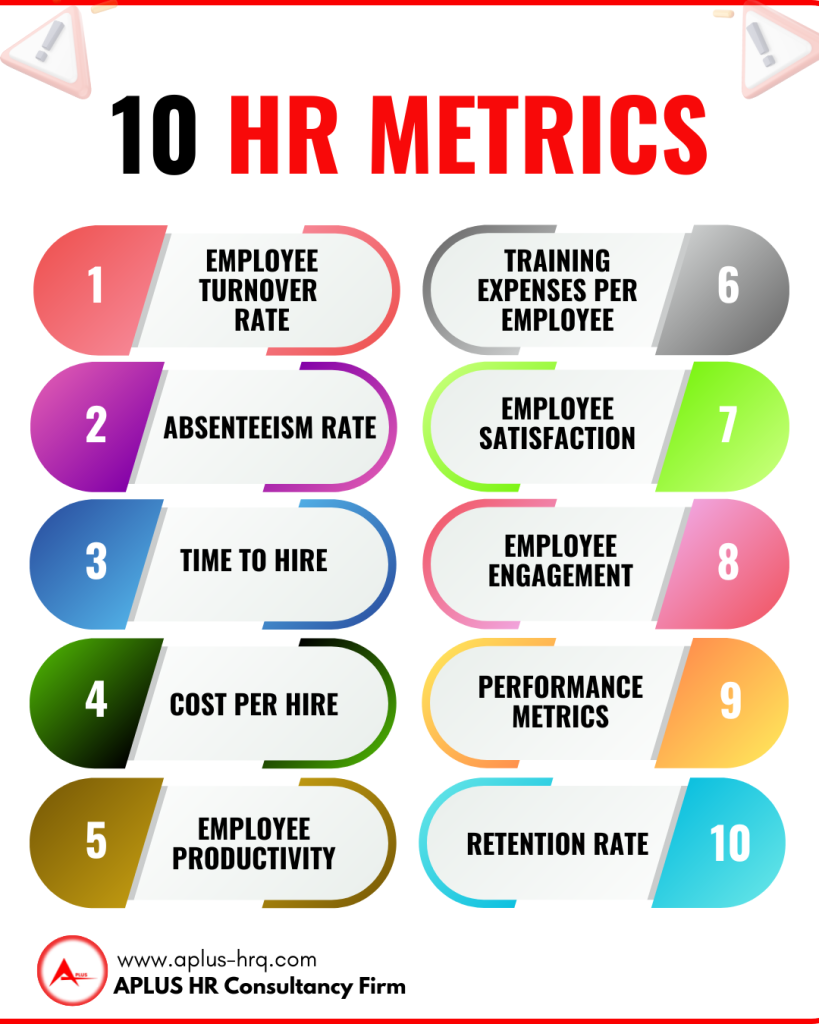
10 HR Metrics you should track to protect and grow your Business

In today’s competitive market, managing your people efficiently is critical for success. But without the right data, even the best HR strategies can fall short.
Tracking key HR metrics helps business owners make informed decisions, reduce costs, improve employee satisfaction, and strengthen company culture.

At APLUS HR Consultancy, we strongly recommend you monitor these 10 important HR metrics to protect and grow your business:

1. Employee Turnover Rate

Employee turnover rate measures the number of employees who leave your company during a specific period, whether voluntarily or involuntarily.
A high turnover rate can indicate dissatisfaction, poor management practices, lack of growth opportunities, or cultural issues.
Tracking this metric allows you to identify root causes early and create strategies to retain your best talent — saving money on recruitment and training costs.

Tip: Aim for a turnover rate lower than your industry average to stay competitive.


2. Absenteeism Rate

Absenteeism rate shows how often employees are absent from work without a valid reason.
Frequent absenteeism can affect team productivity, increase workload for other employees, and hurt company morale.
By monitoring this rate, you can identify if absenteeism is due to poor engagement, health issues, or workplace dissatisfaction, and implement corrective measures.

Tip: Offering flexible working hours or wellness programs can help reduce absenteeism.


3. Time to Hire

Time to hire is the number of days between posting a job opening and signing the employment contract with a candidate.
Long hiring processes can result in losing top talent to competitors.
By tracking this metric, you can assess the efficiency of your recruitment process and make necessary improvements to attract and hire faster.

Tip: Streamline interviews and decision-making to shorten your time to hire.


4. Cost per Hire

Cost per hire refers to the total expense involved in hiring a new employee.
This includes advertising costs, recruiter fees, candidate assessments, onboarding, and training expenses.
Tracking this metric helps you manage your recruitment budget wisely and find ways to optimize hiring costs without compromising candidate quality.

Tip: Investing in a strong employer brand can lower your cost per hire over time.


5. Employee Productivity

Employee productivity measures the output of employees over a set period, often compared against goals or targets.
High productivity means your team is working effectively, while low productivity may highlight issues such as poor training, low morale, or unclear expectations.
Monitoring productivity helps you recognize top performers and identify teams or individuals who may need support.

Tip: Clear goal-setting and regular feedback can significantly boost productivity levels.


6. Training Expenses per Employee

Training expenses per employee measure how much you invest in developing each employee’s skills and knowledge.
While training involves costs, it’s an important investment that leads to higher productivity, better job satisfaction, and improved employee retention.
Tracking this metric ensures your training budget is effective and aligned with your business goals.

Tip: Focus on training programs that have a direct impact on your company’s performance.


7. Employee Satisfaction

Employee satisfaction reflects how happy and fulfilled your employees feel at work.
Satisfied employees are more likely to stay longer, perform better, and promote a positive workplace culture.
You can measure satisfaction through regular surveys, feedback sessions, and one-on-one interviews.

Tip: Take action based on survey results — employees appreciate when their voice leads to real changes.


8. Employee Engagement

Employee engagement measures the emotional commitment employees have toward their work and your company.
Engaged employees are motivated, innovative, and willing to go the extra mile.
Tracking engagement levels helps you create strategies to boost morale and loyalty, which in turn impacts business results positively.

Tip: Recognition programs and career development opportunities can significantly boost engagement.


9. Performance Metrics

Performance metrics evaluate how well employees achieve their set goals and contribute to company objectives.
By consistently measuring performance, you can identify high performers, reward success, address underperformance early, and align everyone towards shared goals.

Tip: Set clear, measurable KPIs (Key Performance Indicators) for every role in your company.


10. Retention Rate

Retention rate measures the percentage of employees who stay with your company over a given period.
A high retention rate suggests a healthy workplace culture, effective management, and good job satisfaction.
Retention is critical because replacing employees is expensive and disruptive.

Tip: Focus on career growth, fair pay, and work-life balance to improve retention.


Why Tracking HR Metrics is Critical for Your Business

Tracking HR metrics is not just about numbers — it’s about understanding your workforce and building a strong, future-proof company.
With these insights, you can:

  • Reduce hiring and training costs
  • Build a stronger, more loyal team
  • Improve employee satisfaction and engagement
  • Boost productivity and overall business performance
  • Make smarter, data-driven HR decisions

At APLUS HR Consultancy, we help businesses like yours track and analyze the right HR metrics. We design customized HR solutions that match your company’s size, industry, and specific needs — whether you’re a startup, SME, or large corporation.


Ready to take control of your HR performance?

Contact APLUS HR Consultancy Today!
We are your trusted HR partner in Egypt, helping businesses thrive through strategic and tailored HR solutions.

Call us or Message us now for a free consultation!

APLUS HR Consultancy – Your HR Success Partner

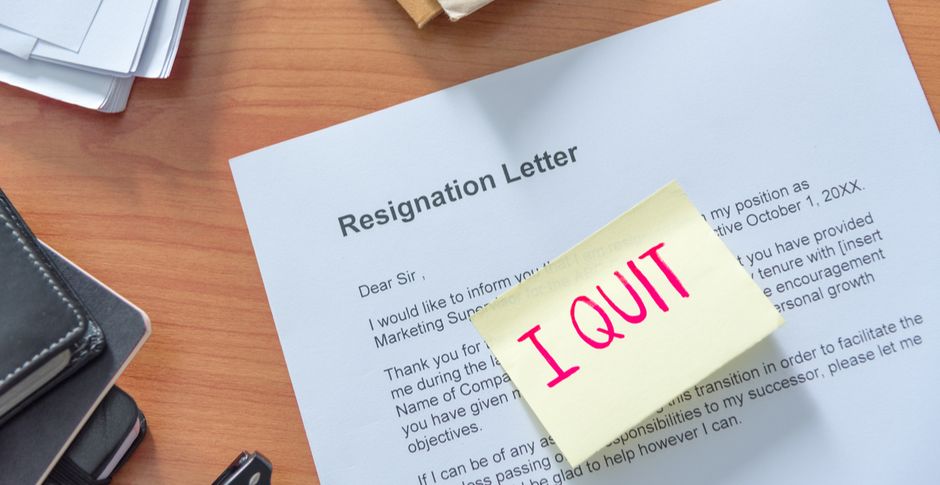
10 Warning signs your employee is about to resign!

Employee turnover is one of the biggest challenges facing business owners in Egypt and around the world. Whether you’re running a small startup or managing a large corporation, losing a key employee can disrupt your operations, lower team morale, and increase costs related to recruitment and training. But what if you could prevent this loss before it happens? Recognizing the early warning signs of an employee preparing to resign allows you to take proactive steps to re-engage them and retain top talent.

In this article, we explore 10 common signs your employee may be planning to leave. These insights are based on real-life HR case studies and our 25 years of consulting experience with businesses across various industries in Egypt. We’ll also offer practical advice on what you, as a business owner, can do to prevent resignation and create a more engaged, loyal workforce.

If you’re searching for terms like how to reduce employee turnover, signs of employee resignation, or HR consulting in Egypt, this guide is designed for you.

10 common signs your employee may be planning to leave:

1. Frequent Secret Calls
Employees who are planning to leave often take more personal calls than usual. These calls may be taken in private, outside the office, or in hushed tones. This behavior may indicate ongoing conversations with recruiters, job interviews, or discussions about offers.

Action Step: Track if the behavior becomes a pattern. Consider scheduling a casual one-on-one meeting to check in.


2. A Sudden “Glow” or Excitement
A noticeable change in attitude — appearing happier, more confident, or even dressing better — can be a clue. This “glow” often results from a new job offer or positive feedback from another employer.

Action Step: Ask your employee what’s new or exciting in their life. Build trust to keep communication open.


3. Changes in Attendance
When punctual employees start arriving late or leaving early without explanation, it’s a strong sign their focus is shifting. It may be due to interviews or simply a lack of motivation.

Action Step: Monitor attendance trends and follow up discreetly with questions about workload and satisfaction.


4. Private Online Meetings
You notice blocked-off calendar slots labeled “personal” or “busy,” or the employee frequently joins video calls in private areas. These might be job interviews or initial onboarding sessions with a new employer.

Action Step: Respect privacy, but keep an eye on repeated patterns. Ensure your team meetings stay collaborative.


5. Lack of Engagement in Projects
Disengagement shows through missed deadlines, lack of ideas, and minimal participation. If a once-active employee now avoids responsibilities, it’s time to act.

Action Step: Assign them a new challenge and ask for their input. Sometimes, they just need re-engagement.


6. Drop in Performance
Sloppy work, lower productivity, and repeated mistakes signal decreased motivation. This can be especially damaging if the employee handles critical tasks.

Action Step: Conduct a performance review and discuss potential support or development needs.


7. Avoidance of Future Conversations
Employees thinking of leaving don’t ask about bonuses, career paths, or team plans. They stop attending development meetings and avoid long-term discussions.

Action Step: Ask, “Where do you see yourself with us next year?” and explore if their goals align with your company’s path.


8. Withholding Information
Suddenly, they stop updating documentation, become less transparent, or hesitate to delegate. This may be their way of distancing from future responsibilities.

Action Step: Promote knowledge sharing and cross-training to reduce information silos.


9. Emotional Withdrawal
If someone who used to engage with their team is now distant, avoids social interactions, or seems emotionally checked out, they may be preparing to leave.

Action Step: Check in on their mental well-being. Emotional withdrawal can also be a sign of burnout.


10. Changes in Appearance
An employee suddenly dressing more formally, especially on specific weekdays, could indicate job interviews. While appearance alone isn’t a sure sign, combined with other behaviors, it adds up.

Action Step: Observe changes respectfully and look for other accompanying signs.

How to Prevent Employee Resignation

Spotting the warning signs of employee resignation is only the first step. The real key lies in creating a work environment where people feel valued, supported, and motivated to stay. When employees feel invisible or disconnected from the company’s mission, they begin exploring other opportunities. On the other hand, a culture that promotes trust, recognition, and growth can dramatically reduce turnover and build long-term loyalty.

Understanding the root causes behind employee disengagement is crucial. It’s often not about salary alone. Factors like poor management, lack of appreciation, limited growth opportunities, and weak communication channels play a major role in an employee’s decision to leave.

Here’s how you can proactively prevent resignation and improve retention:

1. Build a Culture of Appreciation
Recognize both small and large achievements. Employees who feel appreciated are far more likely to stay committed.

2. Foster Two-Way Communication
Encourage regular feedback — not just top-down, but also bottom-up. Make it easy for employees to voice concerns and ideas.

3. Conduct Stay Interviews
Don’t wait for the exit interview to find out why employees are unhappy. Regular check-ins help address problems before they escalate.

4. Provide Career Development Plans
Help your employees map out their growth within your company. Provide training, mentorship, and clear career paths.

5. Address Burnout Early
Pay attention to workloads and signs of stress. Create a healthy work-life balance and support mental well-being.

6. Empower Managers to Lead Effectively
Train your managers on leadership, emotional intelligence, and conflict resolution. A great manager is often the reason employees stay.

7. Align Values and Purpose
Ensure your company’s mission is clear and inspiring. Employees want to work where they feel their contributions matter.

8. Customize Retention Strategies
Use employee data and insights to build tailored retention plans. Different generations and roles may require different approaches.

Need Support?

If you’ve noticed these signs in your team, now is the perfect time to take action. Our experienced consultants are ready to help.

📞 Contact us today for a free HR consultation and let’s discuss how we can support your business.

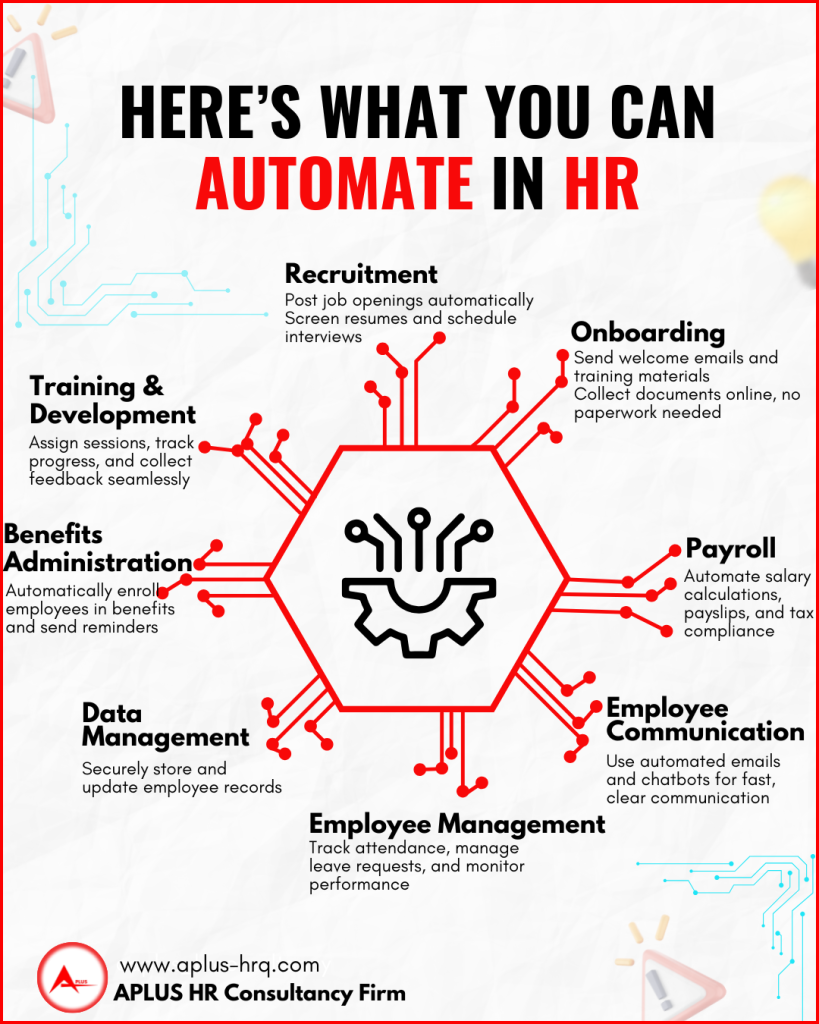
What you can Automate in HR: A complete guide for Business Owners

Introduction

Managing human resources is one of the most important — and often most complex — parts of running a successful business. Whether you own a small business, lead a startup, or manage a large enterprise in Egypt, HR tasks can quickly become overwhelming, especially if you’re doing everything manually.

From hiring and onboarding to payroll and performance reviews, the traditional HR process is full of repetitive work that takes up valuable time. Worse, manual systems often lead to errors, delays, and compliance risks — which can be costly in the long run.

That’s why more and more companies are turning to HR automation.

At [Your Company Name], we help business owners simplify and digitize their HR functions. In this blog, we’ll walk you through 7 key areas of HR you can automate to save time, reduce costs, improve compliance, and give your employees a better experience.


Why Should You Automate HR Processes?

Let’s start with the basics. HR automation means using software to handle repetitive and routine tasks. Instead of relying on spreadsheets, paper forms, and manual processes, automated systems take care of these tasks in the background — quickly, accurately, and without human error.

Here’s what HR automation can help you achieve:

  • Time savings – Spend less time on admin and more on strategic work
  • Error reduction – Automation eliminates common human mistakes
  • Cost efficiency – Reduce the need for extra staff or overtime
  • Compliance – Stay up to date with Egyptian labor laws and social insurance requirements
  • Scalability – Easily manage HR as your team grows
  • Employee satisfaction – Offer smoother, faster HR services to your team

Now, let’s look at the top 7 HR functions you can automate in your company.

1. Recruitment

Recruiting new employees takes a lot of time — from writing job ads to scheduling interviews. Automating this process can make hiring faster and more efficient.

What You Can Automate:

  • Job Postings: Automatically publish job ads on multiple platforms like Wuzzuf, LinkedIn, and Facebook with one click.
  • Resume Screening: Use filters and keyword searches to quickly sort through large volumes of applications.
  • Interview Scheduling: Let candidates select their preferred time slots using online scheduling tools.

Pro Tip:

Automation helps you focus on selecting the best talent, not just managing paperwork. It also improves the candidate experience by making the process faster and smoother.


2. Onboarding

A strong onboarding process helps new hires feel confident and supported. But onboarding can involve dozens of small tasks — from paperwork to training. Automating these tasks creates a seamless and professional experience.

What You Can Automate:

  • Welcome Emails & Information Packs: Automatically send introductions, company policies, and login details before the first day.
  • Document Collection: Allow new employees to upload IDs, bank details, and signed contracts through a secure online portal.
  • Onboarding Task Lists: Create task checklists (e.g., IT setup, training sessions) and track progress in real-time.

Pro Tip:

Employees who experience smooth onboarding are 69% more likely to stay with the company for 3+ years. Automation can make that difference.


3. Employee Management

Once employees are onboard, managing their day-to-day activities and performance is an ongoing task. Automation can bring structure and visibility to these processes.

What You Can Automate:

  • Attendance & Time Tracking: Use digital systems to log working hours, breaks, and remote check-ins.
  • Leave Management: Let employees request vacation, sick leave, or personal time off through a self-service portal.
  • Performance Reviews: Automatically schedule reviews, send feedback forms, and store performance data.

Pro Tip:

Digitized employee management improves accountability and gives managers real-time insights into team performance.


4. Payroll

Manual payroll is one of the riskiest parts of HR — one wrong number can lead to compliance problems, delayed payments, and unhappy staff. Automating payroll ensures every employee gets paid the right amount on time, every time.

What You Can Automate:

  • Salary Calculations: Automatically include base salary, overtime, deductions, and bonuses.
  • Payslip Generation: Email employees their payslips each month with full breakdowns.
  • Tax & Insurance Compliance: Apply social insurance and tax rules according to Egyptian labor law.

Pro Tip:

Automated payroll systems reduce payroll processing time by up to 80% and help you avoid penalties for late payments or reporting errors.


5. Employee Communication

Keeping employees informed is a must — but it’s also time-consuming. With automated communication tools, you can ensure everyone receives the right messages without flooding your inbox.

What You Can Automate:

  • Company Announcements: Schedule and send updates to employees instantly via email or internal platforms.
  • HR Chatbots: Use chatbots to answer frequently asked HR questions like “How many vacation days do I have?”
  • Automated Surveys: Collect employee feedback or engagement data at regular intervals.

Pro Tip:

Clear, consistent communication builds a positive workplace culture and boosts employee engagement — even in large teams.


6. Data Management

As your business grows, keeping track of employee information, documents, and reports becomes harder. A centralized digital system helps you organize everything in one place.

What You Can Automate:

  • Employee Recordkeeping: Store personal info, contracts, certificates, and more in secure, searchable databases.
  • Self-Service Updates: Let employees update their own contact info, banking details, and more.
  • Reports & Analytics: Generate instant reports on turnover, attendance, overtime, etc., with one click.

Pro Tip:

Automated data systems give you better control over your HR information — and reduce risk during labor inspections or audits.


7. Training & Development

Training your team regularly is essential to keeping them engaged and skilled. But tracking who completed what training — and when — can be a nightmare without automation.

What You Can Automate:

  • Training Assignments: Automatically assign required courses based on department or role.
  • Progress Tracking: Monitor course completion and attendance through dashboards.
  • Feedback Collection: Send post-training surveys to measure quality and impact.

Pro Tip:

Investing in automated training systems helps you close skill gaps faster and supports career growth, which leads to better retention.


Summary: Transform Your HR with Automation

To stay competitive in today’s market, your HR systems must evolve. Automation allows you to:

  • Focus on strategy instead of admin
  • Improve accuracy and compliance
  • Deliver a better experience to employees
  • Grow your business without growing your workload

No matter your company size or industry, HR automation helps you work smarter — not harder.


Ready to Automate Your HR?

GET IN TOUCH

Schedule a free HR Consultation

Mechanical Engineer

Location: Badr City, Cairo, Egypt
Industry: Heavy Industry
Experience: Min. 3 Years
Employment Type: Full-Time


Job Summary:

We are seeking an experienced Mechanical Engineer with 3 years of experience in heavy industry. This role involves designing, maintaining, and optimizing industrial machinery and equipment to ensure efficient operations and continuous improvement. Knowledge of diesel engines is required.


Key Responsibilities:

  • Design & Development: Create and test mechanical systems and components for heavy industry applications.
  • Maintenance & Troubleshooting: Oversee maintenance, repair, and optimization of machinery, with a focus on diagnosing and resolving diesel engine issues.
  • Project Management: Lead engineering projects from initiation to completion, ensuring they are delivered on time and within budget.
  • Process Improvement: Identify areas for operational improvement and implement solutions to enhance efficiency and reliability.
  • Safety & Compliance: Ensure all work complies with health, safety, and environmental regulations.

Qualifications:

  • Bachelor’s degree in Mechanical Engineering.
  • 3 years of experience in the heavy industry.
  • Strong knowledge and hands-on experience with diesel engines.
  • Proficiency in CAD software.
  • Strong problem-solving, project management, and communication skills.
  • Solid understanding of safety regulations in heavy industry.

Preferred:

  • Experience in lean manufacturing.
  • Professional Engineer (PE) certification.