High employee turnover in Egypt is one of the biggest challenges facing businesses today. Employees don’t leave companies overnight.
High employee turnover is usually a symptom of deeper problems inside the business. Replacing employees again and again is expensive, time-consuming, and disruptive. Yet many business owners focus on hiring replacements instead of fixing the real issues.
If your company is constantly recruiting for the same positions, it’s time to ask a different question:
Why are people leaving in the first place?
Let’s look at the five most common causes of high employee turnover—and what you can do about them.
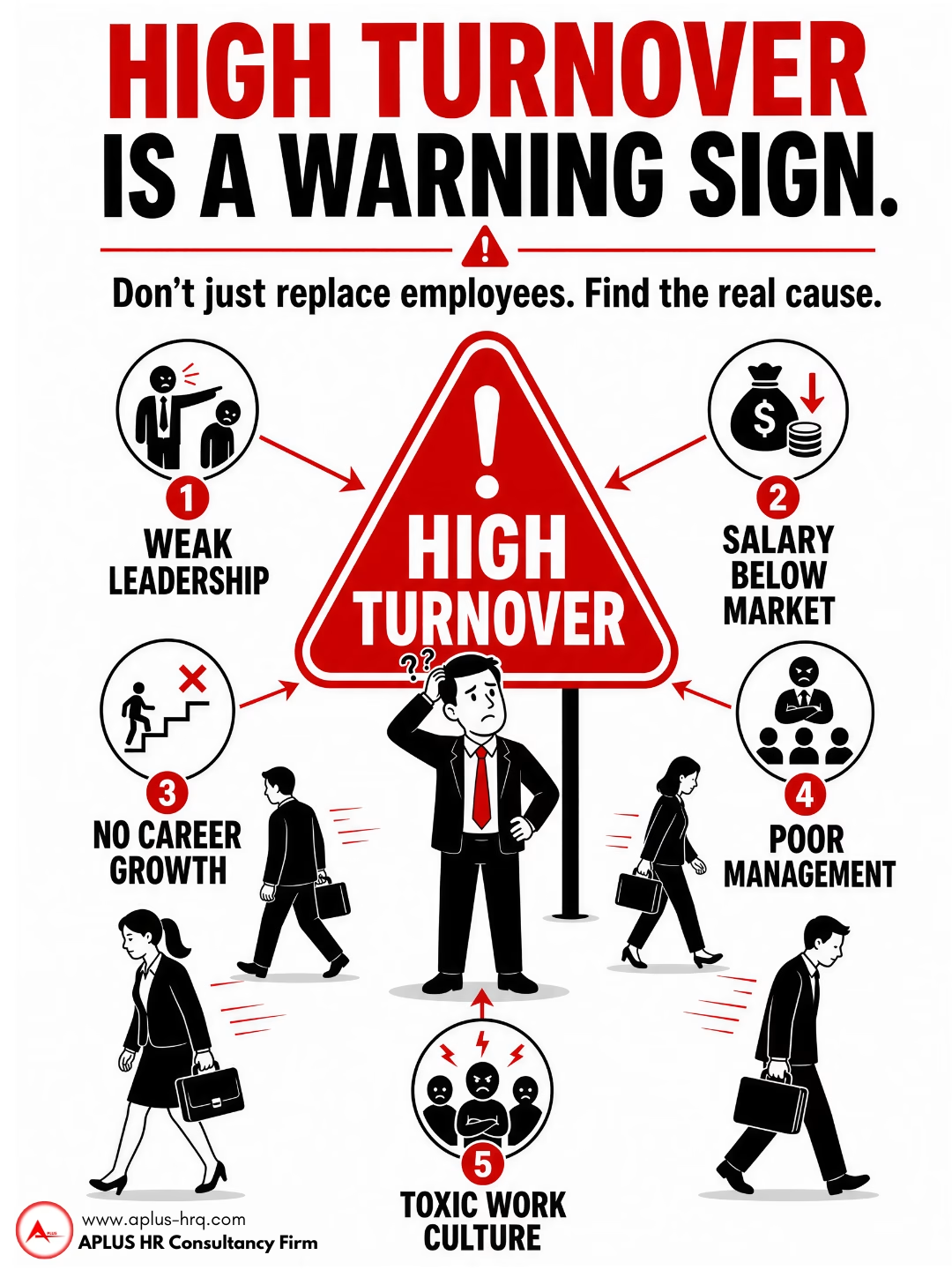
1. Weak Leadership
People rarely leave because of the company alone.
More often, they leave because of their direct manager.
Managers who fail to communicate, provide feedback, support their teams, or make fair decisions create frustration that eventually drives good employees away.
How to reduce employee turnover caused by Weak Leadership
- Train managers in leadership skills.
- Set clear expectations.
- Hold managers accountable for team performance and retention.
- Collect employee feedback regularly.
2. Salaries below market rates
Employees understand that every company has a budget.
However, when they consistently discover they are significantly underpaid compared to similar roles in the market, they begin looking elsewhere.
Competitive compensation isn’t just about attracting talent—it also helps retain it.
How fair compensation improves employee retention:
- Conduct regular salary benchmarking.
- Review compensation annually.
- Offer competitive benefits where possible.
- Create transparent salary structures.
3. No Career Growth
Employees want to know they have a future.
When they don’t see opportunities to learn new skills, earn promotions, or take on greater responsibilities, motivation declines.
Eventually, many leave for organizations that offer better career prospects.
How career development reduces employee turnover
- Create career paths for key positions.
- Provide regular training.
- Discuss career goals during performance reviews.
- Promote internally whenever possible.
4. Poor Recognition
Recognition costs very little, but its impact is significant.
Employees who consistently feel their efforts go unnoticed often lose motivation.
Recognition doesn’t always require bonuses. A simple thank you, public appreciation, or celebrating achievements can strengthen employee engagement.
How employee recognition improves retention
- Celebrate individual and team achievements.
- Introduce employee recognition programs.
- Encourage managers to provide regular positive feedback.
- Recognize effort as well as results.
5. Toxic Workplace Culture
A toxic workplace slowly pushes your best employees out.
Poor communication, favoritism, gossip, unresolved conflicts, and lack of accountability create an environment where talented employees no longer want to stay.
Culture isn’t built through slogans on the wall.
It’s built through the behaviors leaders demonstrate—and the behaviors they tolerate every day.
How to build a workplace culture that retains employees
- Address problems early.
- Define clear company values.
- Build accountability at every level.
- Create an environment based on respect and trust.
Why high employee turnover in Egypt costs more than You think
Every employee who leaves creates hidden costs, including:
- Recruitment expenses
- Onboarding and training new hires
- Lost productivity
- Increased workload for remaining employees
- Lower employee morale
- Reduced customer satisfaction
- Loss of valuable knowledge and experience
Over time, these hidden costs can significantly impact your company’s profitability and long-term growth.
According to the International Labour Organization (ILO), employee retention and decent workplace practices are key factors in building productive organizations.
How Strategic HR helps reduce high employee turnover in Egypt
Many business owners assume turnover is simply part of doing business.
In reality, high employee turnover is often a sign that your HR systems need attention—not that you simply need to hire more people.
One of the most effective ways to uncover the real causes is through an HR Audit & HR Assessment. It helps evaluate your HR policies, organizational structure, recruitment process, compensation practices, performance management system, and compliance with Egyptian labor law. By identifying gaps early, you can solve the root causes before they become costly business problems.
Related article: HR Audit & HR Assessment: What It Is and Why You Need It
Strategic HR helps businesses improve employee retention by strengthening:
- Organizational structure
- Leadership capability
- Recruitment and onboarding
- Performance management
- Compensation and benefits
- Employee engagement
- Workplace culture
The goal isn’t simply to reduce turnover.
It’s to build a workplace where talented employees want to stay and contribute to long-term business success.
How APLUS HR Consultancy helps reduce high employee turnover in Egypt
At APLUS HR Consultancy, we help businesses across Egypt identify the root causes of employee turnover and implement practical HR solutions that improve retention, productivity, and organizational performance.
Our services include:
- HR Audit & HR Assessment
- HR Strategy Development
- Organizational Structure Design
- Job Descriptions & KPIs
- Performance Management Systems
- Salary Benchmarking
- Employee Engagement Surveys
- Leadership Development
- HR Policies & Procedures
Whether you’re a growing SME or an established organization, our consultants help you build HR systems that support sustainable business growth.
Final Thoughts
Hiring new employees is easy.
Keeping good employees is the real challenge.
If your business is experiencing high employee turnover, don’t just focus on replacing people.
Focus on fixing the reasons they’re leaving.
The companies with the strongest teams aren’t necessarily the ones paying the highest salaries.
They’re the ones investing in leadership, career development, recognition, fair compensation, and a healthy workplace culture.
When you solve the root causes, employee retention becomes a natural outcome—not a constant struggle.
Ready to reduce Employee Turnover?
If your business is struggling with high turnover, low engagement, or difficulty retaining top talent, APLUS HR Consultancy can help.
Contact us today for a free HR consultation and discover how strategic HR can strengthen your workforce and support long-term business growth.